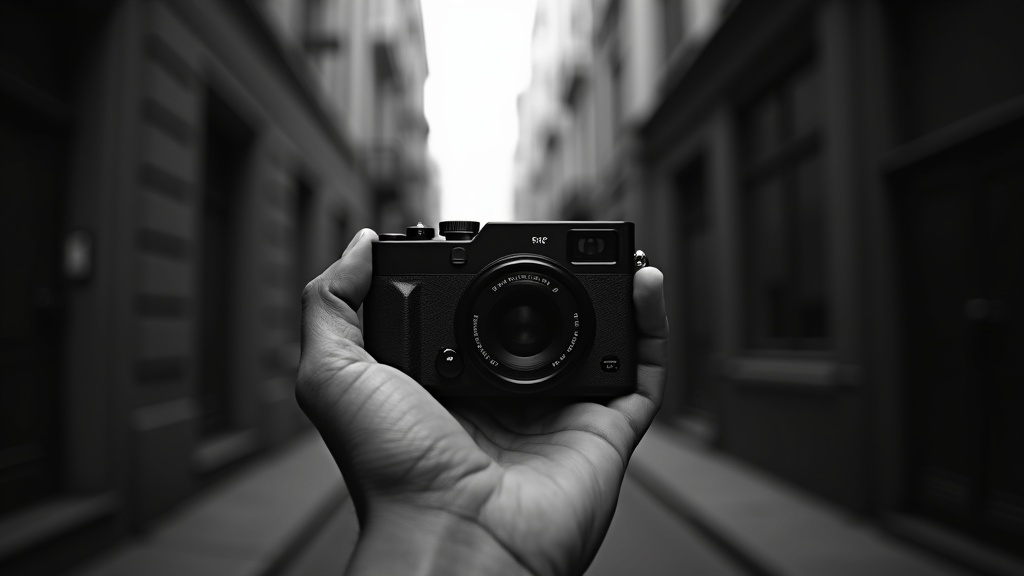
Verdict: Who the RICOH GR IV Monochrome Is Really For
“Is a dedicated monochrome camera worth spending tens of thousands of yen on?” — Let’s answer that question honestly, upfront. The GR IV Monochrome is not for everyone. That’s exactly why it’s important to be clear about who it fits and who it doesn’t.
Who Should (and Shouldn’t) Buy the GR IV Monochrome
This camera is a great fit if you:
- Are passionate about black-and-white expression in street and snapshot photography
- Want to shoot with a “monochrome-first” mindset from the moment you press the shutter
- Want to reduce post-processing and get better straight-out-of-camera results
- Already own a color camera and can dedicate each body to a specific purpose
This camera probably isn’t for you if you:
- Want one camera that handles both color and black-and-white shooting
- Are buying your first serious camera
- Are satisfied with converting color RAW files to black and white in post
Picking up a spare battery or two at the same time means you’ll never have your shoot cut short by a dead camera. Check the latest price on the genuine battery below.
The Real Advantage of Going Dedicated Monochrome
A sensor stripped of its color filter array records light directly as tonal gradations. The difference compared to a color-converted image is most visible in the gradients between highlights and shadows — it’s not subtle.
Another benefit that often gets overlooked is how it changes the way you think as a photographer. When you’re shooting with a dedicated monochrome camera, you stop seeing in color and start reading a scene through light, shadow, texture, and form. This isn’t about specs — it’s a fundamental shift in how you relate to photography itself.
For full specs on the GR IV Monochrome — including pricing and sensor resolution — visit the official RICOH Imaging website.
RICOH GR IV Monochrome: Specs and Design Overview
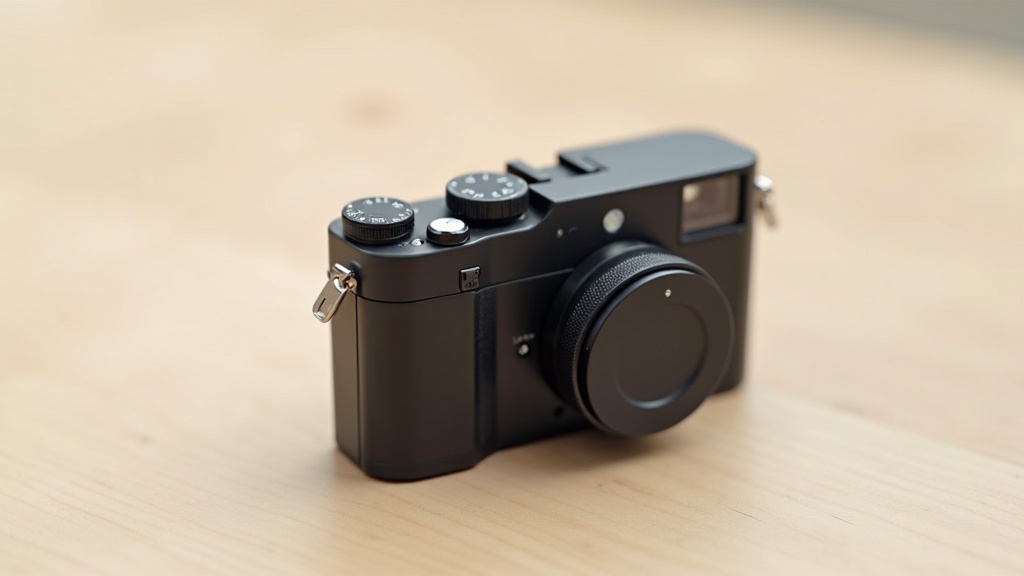
Now that we’ve established who this camera is for, let’s take a closer look at the physical body. Beyond what a spec sheet can tell you, we’ll cover the feel-in-hand quality and day-to-day usability as well.
The GR III is often available for roughly half the price of the GR IV Monochrome, making it a worthwhile option if color shooting is a priority for you. Check the latest pricing and availability below.
Size, Weight, and Build Quality: How Pocket-Friendly Is It Really?
One of the biggest reasons the GR series has earned such a loyal following over the years is that it genuinely fits in your pocket. The GR IV Monochrome carries on the same compact form factor as its predecessors — it slips easily into a jacket chest pocket or the front pocket of your jeans without a fight. For exact body dimensions and weight, check the official website.
The body uses the magnesium alloy chassis traditional to the GR series. Compared to plastic-bodied compact cameras, the difference in rigidity is immediately apparent — the moment it’s in your hand, it feels like a proper tool. That said, the painted surface does scratch relatively easily, so if you care about keeping it pristine, a body skin is worth considering.
Worth noting
The GR IV Monochrome’s body color is unique to this model, designed to match the aesthetic of a dedicated monochrome camera. If you put it side by side with the standard GR IIIx, the visual difference is immediately noticeable.
Since this is a camera you’ll want to carry every day, it’s worth looking into the genuine soft case to protect it from scratches and bumps. Check pricing and availability for the RICOH GC-9 below.
Controls, Interface Changes, and Everyday Usability
The GR series has always been built around a “get out of your way and let you shoot” philosophy. The ADJ dial and ADJ lever remain central to the control scheme, giving you fast access to frequently used settings like exposure compensation, ISO, and white balance.
- Customizable function buttons let you assign controls to match your shooting style
- Snap Focus (distance-preset AF) is especially powerful for street photography
- Touch-enabled rear LCD supports tap-to-move AF point selection
To be honest about the downsides: there’s no EVF, so rear LCD visibility in bright sunlight has its limits. In practice, you’ll either want to add an external OVF or crank up the LCD brightness. Battery life is also a real consideration — for longer shooting sessions, spare batteries are essentially mandatory. For full details on controls and specifications, visit the official product page.
Rendering Power Born from a Dedicated Monochrome Sensor
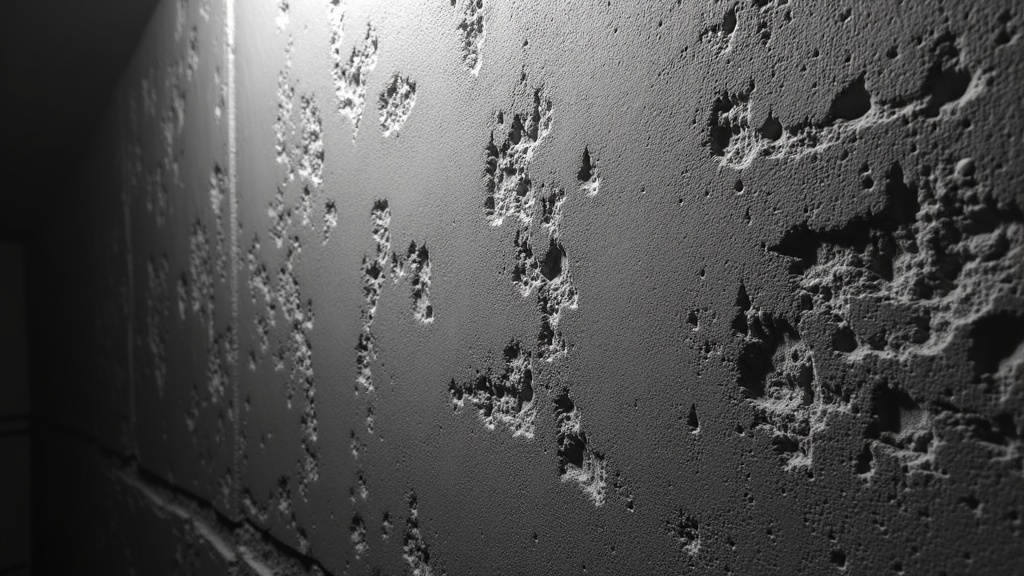
When you hear “dedicated monochrome camera,” you might feel uneasy about not being able to shoot in color. But that very limitation is the camera’s greatest strength. Once you understand how the sensor handles light at a fundamental level, the case for choosing a dedicated monochrome body becomes crystal clear.
What a Color Filter-Free Structure Means: Impact on Resolution and Sensitivity
A standard color sensor places R, G, and B color filters (in a Bayer array) in front of each pixel. A dedicated monochrome sensor eliminates these filters entirely, allowing every pixel to record the luminance of incoming light directly.
Key Benefits of Removing the Color Filter Array
- No light loss from filters means higher effective sensitivity at the same ISO setting
- No Bayer demosaicing (the process of estimating actual color from neighboring pixels) means zero false resolution artifacts
- The optical low-pass filter can often be omitted or thinned, resulting in sharper pixel-level resolution
This structural difference shows up most clearly in the rendering of fine textures and thin lines — architectural details, skin texture in portraits — any situation where conveying the tactile quality of a subject really matters.
High-ISO Performance and Noise Character: A Comparison to Film Grain
When you compare a color sensor and a dedicated monochrome sensor at high ISO, the quality of the noise is fundamentally different. Color sensor noise manifests as color blotching (chroma noise) that’s immediately distracting, whereas a dedicated monochrome sensor produces only luminance noise — giving it an appearance much closer to film grain.
How Noise Looks: The Difference from Color Cameras
Chroma noise tends to smear fine detail when you try to remove it in post. Luminance noise, on the other hand, can be left in intentionally and integrated into the image as a pleasing grain texture — which means the threshold for “usable” high-ISO shots is judged very differently than with a color camera. That said, this depends entirely on your aesthetic preferences; if you prefer smooth, clean tones, you’ll want to apply noise reduction more aggressively.
Three-Dimensionality from the GR Lens (28mm equiv. F2.8) Pairing
The GR series lens is known for its unusually high peripheral resolution for a compact camera. When paired with a dedicated monochrome sensor, chromatic aberration becomes a non-factor, letting the lens’s native resolving power transfer directly to the image without compromise.
The 28mm equivalent field of view is a natural fit for street shooting — it maintains a comfortable working distance from your subject while still letting you build layered, three-dimensional compositions that include the ambient atmosphere around them. Since color can no longer convey depth in a monochrome image, you’re left working with bokeh and luminance contrast alone to create that sense of dimension. F2.8 won’t give you massive blur, but paired with the depth-of-field characteristics of 28mm, it strikes an easy balance between sharpness at the plane of focus and a smooth, gradual falloff behind it.
Downsides Worth Knowing
Being a dedicated monochrome camera means you can never capture the same frame in both color and black-and-white. Once you’ve pressed the shutter, the option to go color simply doesn’t exist — so this is a camera that works best when you’ve already narrowed down your subjects and shooting scenarios. If versatility is a priority, a color camera with monochrome conversion in post is the more practical choice.
Real-World Samples: Results Across Different Shooting Scenarios
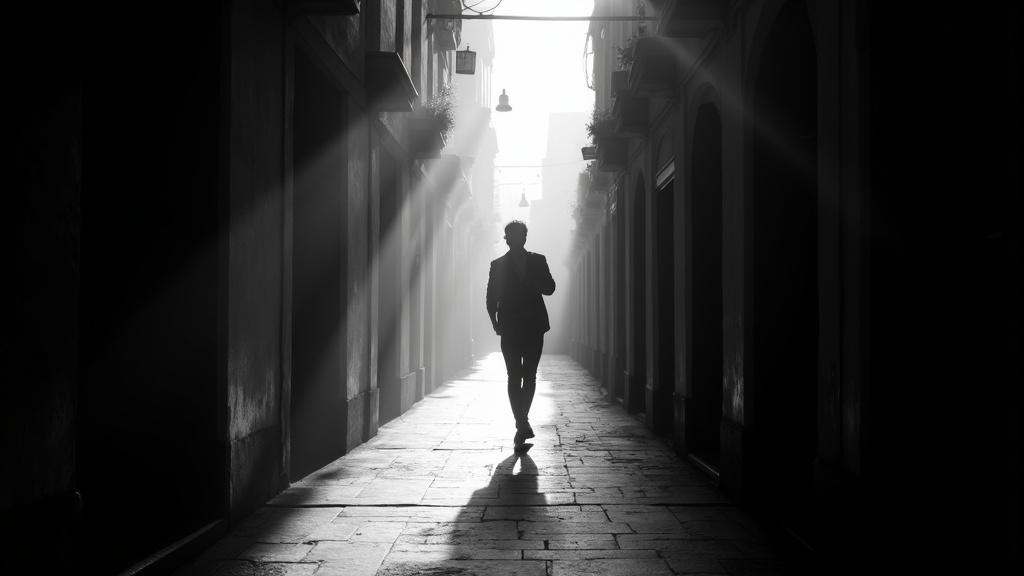
Let’s see how the sensor-level advantages covered in the previous section actually show up in real shooting results. Spec sheets can only tell you so much — here’s what the rendering quality looks like across a range of real-world scenes.
Street Shooting: Reproducing High-Contrast Light and Shadow
Sunny alleyways, covered arcades, and other scenes with extreme dynamic range are where this camera earns its keep. In situations where monochrome conversion from a color sensor tends to blow out highlights or crush shadows, the GR IV Monochrome keeps the gradation smooth from highlights all the way down into the shadows.
Standout Impressions from Street Shooting
- Concrete textures and the edges of signage lettering come through with real crispness
- Gradations between white walls and shadow are smooth and gradual, with little sense of compression
- Wide latitude for contrast adjustments during RAW processing, giving you a lot of flexibility in post
The custom image modes (film-style presets) are optimized for a dedicated monochrome camera, and straight-out-of-camera JPEGs look quite polished as a result. That said, since there’s no color version to compare against, it can be harder to notice when the final image doesn’t quite match what you had in mind at the time of shooting.
Portraits: Skin Tones and Gradation Rendering
The challenge with monochrome portraiture is keeping skin from turning into a flat, blown-out plane — you need texture and dimensionality at the same time. With the GR IV Monochrome, skin tones distribute richly in the midtones, producing a soft result that’s close to what you’d get from film portrait photography.
Without a color filter array, the sensor receives green- and red-wavelength light simply as light, without distinguishing between them. This means the subtle variations in skin tone from natural blood circulation render as gradation — which is exactly what creates that film-like three-dimensionality.
That said, the 28mm equivalent field of view (40mm equivalent on the GR IIIx) means there’s no telephoto compression at play here. This camera suits candid street portraits shot at natural distances; for studio work or tighter bust-up shots, the focal length will start to feel constraining.
Night and Low Light: Grain Character and Gradation at High ISO
High-ISO behavior is one of the scenes where the dedicated monochrome sensor’s advantages stand out the most. Where a color sensor would pile on disorganized chroma noise, the GR IV Monochrome produces only luminance noise — meaning it blends into the frame as uniform, film grain-like texture rather than visual clutter.
Point 1
No color breakdown at high ISO means you can push the sensitivity aggressively in night alleys or indoor shooting without hesitation
Point 2
Shadow detail holds up relatively well even at high ISO, making it easier to keep the dark areas from going completely black
Point 3
At extreme ISO levels, some resolution loss is unavoidable — this is a sensor-size limitation that comes with the territory
The grain character at night is something that will resonate deeply with anyone who has shot on film, but shooting RAW and dialing in noise reduction carefully will help you map out your own personal sweet spot for usable ISO — and that consistency will make your shooting style a lot more stable over time.
How It Compares to the GR IIIx (Color Model) — and How to Choose
“I’m interested in the GR IV Monochrome, but I’m not sure how it’s different from the color model” — it’s a question we hear a lot. Plenty of people who already own a GR IIIx are wrestling with whether to add the Monochrome to their kit. Let’s break down the differences clearly and help you figure out which one makes sense for you.
If you want the flexibility to shoot in color, or you’re just getting started with the GR’s rendering and want to see what it can do, the GR IIIx is the more versatile choice. Check the latest prices and availability if you’re interested.
GR IV Monochrome vs. GR IIIx: Spec Comparison
| GR IV Monochrome | GR IIIx | |
|---|---|---|
| Sensor | Dedicated monochrome APS-C | Color APS-C (Bayer array) |
| Focal Length | See official website for details | 40mm equivalent (F2.8) |
| Color Shooting | Not available | Yes (monochrome mode also available) |
| Sharpness (in monochrome) | Full benefit of no low-pass filter | Demosaicing process applies |
For specs that change frequently — like price and weight — check the official website for the latest information.
If you want to know the current street price or stock status, it’s worth checking the latest listings. If the idea of a dedicated monochrome camera speaks to you, comparing the specs and price side by side is a worthwhile exercise.
3 Reasons to Choose a Dedicated Monochrome Camera
- Pure sensor resolution, fully utilized: In a color camera, the Bayer array interpolates color information from neighboring pixels. A dedicated monochrome sensor skips that interpolation entirely, recording luminance data directly to each pixel — which translates to a noticeable step up in fine detail rendition at the same sensor size.
- High-ISO noise has a different character: High-ISO noise in color cameras is a mix of chroma noise (random color blotches) and luminance noise. A monochrome sensor produces luminance noise only, which has a natural, film-grain-like quality that’s much easier to work with.
- Fewer decisions in the field: You’re never stuck asking yourself, “Should I shoot in color and convert later, or commit to black and white now?” Committing fully to monochrome sharpens your eye for composition and light in a way that hedging never does.
When a Color Camera Is Enough: What Monochrome Conversion Can and Can’t Do
To be honest, if you’re shooting for work or documentation purposes, the GR IIIx is the more practical tool. Keeping color data in your RAW file means you can always decide later to finish an image in color — you never have to close that door before you get to the editing stage.
What monochrome conversion can’t replicate: The resolution advantage of a dedicated monochrome sensor only becomes apparent when you’re printing large or viewing at 100%. If your primary output is social media or prints at A4 size or smaller, the difference will likely be imperceptible in practice.
For photographers who shoot primarily street and snapshot work and have already settled into a monochrome visual style, the GR IV Monochrome is a clear and confident answer. But if you’re still figuring out your approach, it’s worth keeping a color camera on hand and experimenting with black-and-white conversions in post before fully committing.
Portability and Handling as a Snapshot Camera
The best camera is the one you actually take with you. And honestly, that’s at the heart of why the GR IV Monochrome exists. It slips into a pocket just like every GR before it — making it a legitimate option for days when you don’t want to haul a larger system.
Startup Speed and AF: Will You Miss the Shot?
One of the GR series’ most practically useful strengths is how fast it wakes up. A half-press of the shutter button brings it to life almost instantly — no waiting around after you’ve already spotted something worth shooting. You see it, you raise the camera, you fire. That rhythm is exactly what street photography demands.
One caveat: The contrast-detect AF system can hunt in low light or low-contrast scenes. Plan on using manual focus or snap focus (pre-setting focus to a fixed distance) when conditions get tricky — it’ll save you a lot of missed shots.
Battery Life and Charging: How Many Shots Will You Get in a Day?
Battery life has always been a sore point across the GR lineup, and this model is no exception. For rated shot counts, refer to the official website — but if you’re planning a full day of shooting on the move, carrying one spare battery is the realistic approach. That said, USB-C charging support is a genuine quality-of-life win: you can top up from a portable battery pack on the go, which changes the math considerably.
- Charge from a USB-C power bank while you’re in transit
- One spare battery is typically enough for a full day of shooting
- Topping up at a café or on the train keeps you covered
Weather Sealing: How Safe Is It Outdoors?
The GR IV Monochrome is not weather-sealed. That’s worth keeping in mind if you shoot outdoors frequently — rain and dusty environments are genuine risks. A sudden light drizzle is manageable if you can pocket the camera quickly, but if you want to shoot actively in bad weather, pairing it with a weather-sealed body is worth considering.
If weather protection matters to you, look into the official camera protector accessory. It won’t make the camera waterproof, but it does add some resistance to minor moisture exposure.
Honest Downsides: What to Know Before You Buy
You Have to Be at Peace with Shooting Monochrome Only
A dedicated monochrome camera means that shooting in color simply isn’t an option — full stop. When you come across a landscape that stops you in your tracks, or a subject where color is the whole point, you have to accept that constraint and work within it.
You’ll need to either pair it with a smartphone or a color camera, or go in with the firm conviction that monochrome is all you’ll ever want. Half-hearted commitment tends to leave this kind of camera gathering dust — so be honest with yourself before pulling the trigger.
Price and How to Think About Value
Dedicated monochrome models in the GR lineup tend to carry a price premium over the standard color versions. For current pricing, check the official website.
- Given the limited use case, it’s worth carefully weighing whether the price is justified for your situation
- Before committing, compare the results against black-and-white conversions from a color camera with your own eyes
- If this is a secondary camera, the cost-to-benefit ratio deserves even closer scrutiny
The real question is whether you genuinely value the tonal gradation that only a dedicated monochrome sensor can deliver. Your answer to that question is the deciding factor.
RAW Workflow Considerations
RAW files from a dedicated monochrome sensor have a different data structure than those from a standard color sensor. Before you buy, make sure your editing software actually supports monochrome RAW files.
Things to check before you start editing
- Your current software version and its compatibility with monochrome RAW
- How to keep your color and monochrome editing workflows separate
- How much post-processing you’re willing to do — and whether the in-camera JPEG output is good enough for your needs
The good news is that the in-camera JPEG output is quite polished, so you can absolutely shoot JPEG-only when you don’t want to deal with editing. That said, if you plan to push the files in post, expect to revisit your entire workflow from the ground up.
Where and How to Buy: Pricing Guide
How to Check the Retail and Street Price (Official Site & Online Stores)
As a dedicated specialty model, the GR IV Monochrome may have limited availability at brick-and-mortar retailers. Your best starting point is the RICOH official website, where you can find the current MSRP and stock status. The site also lists authorized dealers, which is helpful if you want to get hands-on with the camera before buying.
For street pricing, it’s worth comparing across multiple retailers like Amazon, Rakuten, Yodobashi Camera, and Map Camera. Prices often fluctuate between launch day and a few months later, so there’s no harm in tracking price trends before pulling the trigger.
Prices vary depending on timing and stock availability. Since the information in this article may be outdated, always check the latest pricing on the official site and individual retailers before purchasing.
Official Accessories: GW-4 Wide Conversion Lens & Dedicated Case
RICOH offers the GW-4 wide conversion lens as an official accessory for the GR series. Attaching it extends your field of view for a wider angle, opening up more creative possibilities for street shooting. That said, it does add some bulk, which compromises the GR’s signature pocketability — so consider whether you actually need it for your use case.
Dedicated cases and straps are available from both RICOH and third-party brands. If you’re committing to this camera as your long-term monochrome shooter, investing in a quality protective case is worth it — it pays off in the long run.
Pre-Purchase Checklist
- Check current MSRP and stock status on the official site
- Compare street prices across multiple online retailers
- Factor in the cost of accessories like the GW-4 in your budget
- Review warranty and repair support terms
If you’re looking to shoot wider, check out the official GW-4 wide conversion lens. It extends the angle of view from 28mm equivalent to 21mm equivalent, giving you more freedom for street photography and architectural shots.
RICOH GW-4 Wide Conversion Lens
Final Verdict: The GR IV Monochrome Is for Photographers Who Want to Go All In
Having gone through every aspect of this camera, the honest takeaway is this: it’s not for everyone, but for the right person, it hits different. The dedicated monochrome sensor’s resolving power, the pocketable form factor, and the snap-shooting-optimized controls — if these three things align with how you shoot, there’s really nothing to agonize over.
Overall Rating & Who Should Buy It
This camera truly shines in street photography, architecture, and portraiture — situations where light, shadow, and contrast do the heavy lifting. On the flip side, if family snapshots and colorful travel photos are your main use case, this is clearly not the right tool.
This camera is for you if:
- Monochrome expression is at the core of your photography
- You want to skip the step of converting color RAWs to black-and-white in post
- You’re looking for a serious camera that fits in your pocket every day
- You’ve been shooting with the GR series and are ready for the next level
How to Decide: Dedicated Monochrome vs. a Color Camera Like the GR IIIx
If you’re torn between this and a color model like the GR IIIx, the deciding factor is straightforward. If the majority of your shots end up in black and white, a dedicated monochrome camera is absolutely worth it. If you only occasionally convert to mono, you’re better off shooting with a color camera and converting in post.
Checkpoints to Help You Decide
- Look back at your shots from the past month and count how many you converted to black and white
- If it’s more than half, a dedicated monochrome camera is worth serious consideration
- Think about whether you can realistically carry two cameras — check your budget
Choosing a monochrome-only camera means intentionally narrowing your creative options — and in doing so, deepening your engagement with each shot. Whether that feels limiting or liberating is what will ultimately determine whether this camera is the right fit for you. Be sure to also check the latest availability and pricing on the official site and major retailers.