Best Wireless Earbuds Under $100: Our Top 7 Picks [Bottom Line Up Front]
If you landed here wondering “which one should I actually buy?” — we’ve got you covered. After hands-on testing across four key categories — sound quality, noise canceling (ANC), call quality, and fit — we’ve narrowed it down to seven models, each matched to a specific use case.
Quick Reference Chart (By Price Range & Use Case)
| Model | Price Range | ANC | Best For |
|---|---|---|---|
| Anker Soundcore P40i | ~$40 | ◎ | Best value, daily commute |
| EarFun Air Pro 3 | ~$55 | ◎ | Balanced ANC + sound quality |
| Sony WF-C500 | ~$60 | × | Sony sound on a budget |
| JBL Tune Flex | ~$55 | ○ | Transparency mode priority |
| SoundPEATS Capsule3 Pro | ~$50 | ◎ | Maximum ANC depth |
| EarFun Free 2S | ~$25 | × | Entry-level, tightest budget |
| QCY T13 | ~$20 | × | Secondary pair, disposable use |
Prices are based on current listings on major retailers and may vary. Always check the latest price on the retailer’s page before purchasing.
Our Evaluation Criteria Explained
4 Key Evaluation Axes
- Sound Quality: Bass presence, mid/high separation, and listening fatigue over time
- ANC Performance: Real-world noise reduction in cafes and on public transit
- Call Quality: Mic pickup clarity, wind noise suppression, and how you sound to the other person
- Fit & Stability: Ear tip options, comfort during extended wear
Plenty of earbuds under $100 claim “high-quality audio” and “ANC,” but there’s often a significant gap between spec sheet numbers and real-world performance. That’s why we focused on practical usability for specific scenarios rather than marketing claims alone.
Detailed reviews for each model follow in the next sections. Use the table of contents to jump directly to any model you’re interested in.
How to Choose Wireless Earbuds Under $100: 4 Things to Check Before You Buy
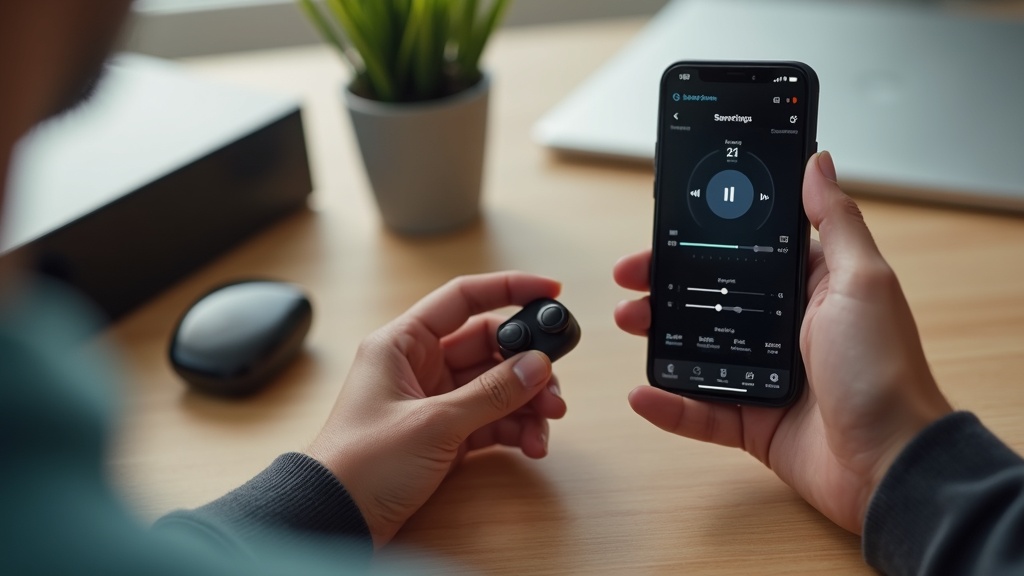
Have you ever bought a cheap pair of earbuds thinking “I’ll just make do,” only to stop using them a few weeks later? Even at this price point, choosing the right pair for your needs is absolutely doable — if you know what to look for. Here are the four things that matter most.
Sound Quality: Driver Size and Codec
The two biggest factors in sound quality are driver size and audio codec. The driver is the component that produces sound — generally speaking, a larger diameter means more bass. Most earbuds in this price range fall between 6mm and 12mm; if you love deep bass, aim for 10mm or larger.
The codec is the audio compression standard used between your phone and earbuds. Beyond the baseline SBC, check whether the earbuds support AAC or aptX. On Android devices, aptX can make a noticeable difference in audio latency. Keep in mind, though, that both your earbuds and your device need to support the same codec for it to matter.
Sound Quality Checklist
- Driver size: 10mm+ if you prioritize deep bass
- Codec: Check for AAC or aptX support beyond SBC
- iPhone users: AAC is sufficient
How to Evaluate ANC Performance Differences
Don’t expect flagship-level noise canceling from earbuds under $100 — you’ll be disappointed. At this price point, ANC works well against low-frequency noise like trains and traffic, but tends to be less effective against mid-to-high frequency sounds like voices and conversations.
The label “ANC included” can mean very different things across brands and models, so checking real-world review videos and measurement data is the most reliable approach. If you mostly use earbuds at home or in the office, focusing on passive isolation (how well the ear tips seal) can actually be more practical than chasing ANC specs.
Don’t choose based on “ANC included” alone. Some budget models actually degrade sound quality when ANC is turned on — always check reviews with ANC both on and off before buying.
Call Quality: Understanding Mic Configurations
If you take a lot of calls while working remotely or on the go, microphone setup is an easy thing to overlook — but it matters a lot. More microphones generally help reduce wind noise and background sounds, but what actually makes the bigger difference is whether the earbuds support beamforming (directional mic pickup), CVC, or AI-based call noise canceling.
A spec sheet listing “2 microphones” could mean stereo recording for music, or a dual-mic array specifically designed to suppress call noise — these are very different things. If call quality is a priority, look for models where the manufacturer explicitly states “call noise canceling supported.”
Fit, Comfort, and Water Resistance
No matter how good the sound is, earbuds that keep falling out or hurt after an hour aren’t worth using. Fit is highly personal, so trying them in person is ideal — but when that’s not possible, check for multiple ear tip sizes (S/M/L as a minimum) and whether the design is in-ear (canal) or open-fit.
Water resistance is listed as an IPX rating. IPX4 (splash-resistant from any direction) is sufficient for workouts and light rain. IPX5 and above typically means you can rinse them under water after a sweaty session.
Water Resistance Quick Guide
- IPX4: Everyday use and light exercise. Sweat and light rain OK
- IPX5+: Intense workouts and rinsing under running water
- Be cautious of models that only say “water-resistant” without a specific IPX rating
Full Specs Comparison: All 7 Models
With those four selection criteria in mind, here’s a side-by-side comparison of all seven picks. Viewing them together makes it much easier to filter down to the model that matches what you care about most.
All prices are reference values as of March 2026. Prices fluctuate with sales and availability — always confirm the current price on the retailer’s page before purchasing.
| Model | Street Price (Est.) | ANC | Battery Life (ANC OFF) |
Water Resistance | Key Codecs |
|---|---|---|---|---|---|
| Anker Soundcore A20i | $25–35 | No | ~10 hrs | IPX5 | SBC / AAC |
| QCY T13 ANC | $30–40 | Yes | ~7 hrs | IPX5 | SBC / AAC |
| EarFun Air | $35–45 | No | ~11 hrs | IPX7 | SBC / AAC |
| Anker Soundcore P40i | $45–55 | Yes | ~12 hrs | IPX5 | SBC / AAC / LDAC |
| EarFun Air Pro 3 | $50–60 | Yes | ~11 hrs | IPX5 | SBC / AAC / aptX Adaptive |
| SOUNDPEATS Air4 | $50–65 | Yes | ~11 hrs | IPX4 | SBC / AAC / LDAC |
| Jabra Elite 4 | $60–75 | Yes | ~7 hrs | IP55 | SBC / AAC |
How to Read This Chart
Battery life figures are manufacturer-rated with ANC off. Enabling ANC typically reduces playtime by 20–30%, and cold temperatures can shrink it further. Rather than taking specs at face value, a good rule of thumb is: if it says 7 hours, budget for 5–6 hours in real-world use.
On codecs: support alone doesn’t help if your phone doesn’t match. You need both devices to support the same codec to see any benefit. If you’re looking to take advantage of LDAC or aptX Adaptive’s higher quality, check your device specs first.
Common IPX misconception: IPX4 means resistance to splashing water from any direction — it does not mean the earbuds can be submerged or used underwater. Even IPX7-rated earbuds used in a pool or bath are done so at your own risk.
Breaking Down the Three Price Tiers
The seven models fall into three broad groups:
- Under $40: No ANC or entry-level ANC only. Best for casual listening and running when you’re willing to trade features for price. If value is your top priority, start here.
- $45–55: The sweet spot where ANC and high-quality codecs start to coexist. If you don’t want to compromise on either, this tier delivers the best balance.
- $60–75: A step up in overall polish — better call quality, app integration, and brand reliability. Worth it for frequent remote workers or anyone with a more discerning ear.
Narrowing down by budget and use case first will help you move through the individual reviews in the next section without getting overwhelmed.

【Detailed Reviews】Our Top 7 Picks, Fully Explained
Spec sheets only tell part of the story — real-world usability is what actually drives your decision. Here’s an in-depth look at each model through the lens of who it’s best suited for.
Anker Soundcore P40i | Best for ANC Performance
This is one of the most polished wireless earbuds under $100, particularly when it comes to noise cancellation. The active noise canceling punches well above its price point, effectively blocking out mid-to-high frequency noise in cafes and on crowded commuter trains.
Best for
Anyone who needs to focus on music or podcasts in noisy environments and puts ANC performance above everything else.
- Powerful ANC creates a focused listening environment wherever you are
- Extended total battery life (earbuds + case) handles all-day use
- IPX5 water resistance keeps you covered during workouts and rainy days
Downside: The sound tuning leans bass-heavy, which may not satisfy listeners who prefer a flat, neutral response for classical or jazz. You can dial it back through the Soundcore app, but there’s a ceiling to how much you can adjust.
If you’re curious about the balance between value and sound quality, check the latest pricing and full specs on Amazon. Free shipping makes it easy to give them a try.
Anker Soundcore P3 | The Well-Rounded Everyday Option
A cornerstone of the Soundcore lineup, the P3 has earned its reputation by being above average across the board rather than excelling in any single area. Its standout feature is the wide EQ customization available through the app, letting you shape the sound to match your taste.
Best for
Users who want a versatile pair that handles music, calls, and video equally well. Also a great first ANC earbuds for beginners.
- Solid ANC, ambient sound mode, and audio quality all in one package
- Detailed EQ adjustment available through the Soundcore app
- Anker’s reliable customer support adds peace of mind
Downside: ANC isn’t quite as strong as the P40i. If noise cancellation is your top priority, you’ll be happier going with the P40i from the same brand — you won’t regret it.
Want to see how the noise canceling holds up against the price? Check the latest pricing and detailed specs to find out.
EarFun Air Pro 3 | Where Sound Quality Meets ANC
EarFun may not have Anker’s name recognition, but the Air Pro 3 goes a step further when it comes to audio quality. With support for the aptX Adaptive codec, pairing these with a compatible smartphone delivers noticeably higher-quality audio transmission. ANC performance is also solid enough to be genuinely useful at this price.
Best for
Anyone who wants better sound quality without sacrificing value. Especially great for users with aptX Adaptive-compatible devices.
- aptX Adaptive support gives it an audio quality edge over the competition
- Well-balanced design that doesn’t compromise ANC for sound (or vice versa)
- Multipoint connection lets you switch between devices seamlessly
Downside: Distribution in the US is thinner than Anker’s, making it harder to audition in person before buying. Since sound preference is subjective, we recommend checking the return policy before purchasing.
For those who prioritize both value and sound quality, the EarFun Air Pro 3 is worth a look — check the latest price, full specs, and reviews all in one place.
Nothing Ear (a) | For Those Who Care About Design and Sound
The bold transparent aesthetic is what sets these apart from everything else. If picking earbuds purely on specs feels boring to you, this is your pick. The sound tuning is thoughtful for the price, making these a favorite among people who refuse to compromise on either looks or audio quality.
Best for
People who treat their earbuds as a fashion accessory. Anyone who wants both great design and great sound without settling for one or the other.
- One-of-a-kind transparent design lets you stand out from the crowd
- Nothing X app offers detailed customization options
- ANC onboard for solid real-world usability
Downside: If raw value-for-money is your only metric, other options at this price point may edge it out on pure specs. Also, the transparent shell shows scratches more easily, so you’ll want to handle it with care.
For shoppers who want both value and sound quality, check the latest price and full specs — many retailers offer free shipping, making it an easy pair to try out.
JLab Go Air Pop | Best for Budget-First, Fuss-Free Use
This one is for people who want something that just works without worrying about losing or breaking an expensive pair. There’s no ANC, but it covers all the basics you need for everyday listening. It’s also popular as a backup pair or a dedicated workout/outdoor set.
Best for
Budget-conscious buyers. People who use earbuds in situations where they might get lost or damaged. Anyone looking for a low-stakes secondary pair.
- One of the most affordable options in the under-$100 category
- Lightweight build stays comfortable even during extended wear
- EQ presets are switchable directly from the earbud — no app needed
Downside: No ANC means these aren’t ideal for noisy environments. Call quality also falls short of higher-end models. These are best suited for quieter settings.
Finding this level of quality at such a low price point is rare — if you’re shopping purely on value, check the latest price to see if it fits your budget.
SOUNDPEATS Air4 Pro | Best for Gaming and Low-Latency Video
Game Mode is the headline feature here, delivering low-latency audio that eliminates the lip-sync lag you might notice when watching video. If you regularly consume video content through earbuds, reducing that delay makes a bigger difference to the experience than you might expect.
Best for
Mobile gamers and frequent video watchers. Anyone who’s been annoyed by audio-visual sync issues on their phone.
- Game Mode dramatically reduces audio-visual lag for a more immersive experience
- ANC helps you stay in the zone without outside distractions
- Compact case makes them easy to toss in a bag
Downside: Game Mode draws more battery. If you mostly listen to music rather than watch video or play games, the advantage over other models narrows considerably — in that case, another pick might serve you better.
If you’re weighing value against audio quality, the SOUNDPEATS Air4 Pro is worth checking out — see the latest price and full specs on the product page.
Xiaomi Redmi Buds 5 | Best for Multipoint and Xiaomi Ecosystem Users
These earbuds integrate seamlessly with Xiaomi and Redmi smartphones, unlocking deeper customization through the companion app. For users who constantly switch between a PC and phone during the workday, the smooth multipoint connection is a genuine quality-of-life upgrade.
Best for
Xiaomi device owners. Professionals who use both a PC and phone simultaneously and need to switch audio sources frequently.
- Multipoint connection makes switching between multiple devices effortless
- Deeper integration with the Xiaomi ecosystem unlocks more settings
- ANC included at a highly competitive price
Downside: Core features work fine with non-Xiaomi phones, but you’ll get less out of the app integration. Domestic customer support is also less robust compared to competitors like Anker. Check the official site for the latest support information.

With active noise canceling and up to 46 hours of total playback time at a street price around $35, this is an easy first pick for value-focused shoppers. Check the latest price and availability to see if it’s in stock.
How to Choose by Use Case
Commuting & Travel: Choosing a Model with Strong Noise Cancellation
Ever tried to enjoy music on a crowded train, only to have the surrounding noise ruin the experience? When it comes to commuting and travel, active noise cancellation (ANC) performance can make or break how much you enjoy your earbuds.
When picking an ANC model under $100, there are three key things to check.
A word of caution: At this price point, it’s important not to expect the same ANC performance as flagship models. Think of it less as “complete silence” and more as “noise is reduced enough to focus on your music” — and you’ll end up much more satisfied.
Remote Work & Online Meetings: Choosing a Model That Prioritizes Call Quality
If you’ve ever been told “you’re breaking up” or “we can barely hear you” during a video call, you know how important mic quality is. For remote work, microphone performance and connection stability should take priority over audio quality for music playback.
Pay close attention to the number of microphones and how background noise is handled. Beamforming setups that combine multiple mics are especially effective at filtering out keyboard clatter and HVAC noise.
Remote Work Checklist
- Does it feature noise-canceling mic technology like cVc or ENC?
- Does it support multipoint connection (simultaneous pairing with PC and phone)?
- Is the fit comfortable enough for extended wear without ear fatigue?
- Can it be used wired while charging? (A good backup when the battery runs low)
Fatigue is a real factor during long meetings. Open-ear designs, which put less pressure on the ear than in-ear models, are worth considering if you’re using earbuds exclusively for work-from-home calls.
Sports & Workouts: Choosing a Model Built for Secure Fit and Water Resistance
Have your earbuds ever slipped out mid-run, or gotten damaged from sweat? For athletic use, “stays in place” and “won’t break from moisture” are the two non-negotiables.
Staying aware of your surroundings is important during outdoor exercise. For running outside, a model with ambient sound mode is actually safer than one that completely blocks out the world. Ideally, look for a model that lets you switch between ANC and transparency mode depending on the situation.
Frequently Asked Questions
Is noise cancellation actually useful under $100?
Can noise cancellation on sub-$100 earbuds actually make a difference?
The short answer: yes, it works — but don’t expect perfection. Compared to models priced over $200, budget ANC tends to struggle more with low-frequency sounds, so fully eliminating train rumble or construction noise may not always be realistic.
That said, there are sub-$100 models that handle office AC hum and café background noise quite well. If you can find a model with adjustable ANC strength levels, you’ll get more flexibility to fine-tune it for different environments.
What to look for: Models labeled “Hybrid ANC” use both feedforward and feedback microphones — a dual-mic setup that typically outperforms single-mic designs. Check the official product spec page to confirm which system a model uses.
Can Android phones use high-quality audio codecs?
Do Android phones support codecs like LDAC or aptX?
Unlike iPhones, many Android phones support high-quality codecs like LDAC, aptX, and aptX HD. The catch: both your phone and your earbuds need to support the same codec. If there’s a mismatch, the connection automatically falls back to SBC.
After connecting, you can usually check which codec is active under your phone’s Bluetooth audio settings (the exact location varies by device). LDAC in particular tends to work best when both devices are from Sony.
- Verify that both your phone and earbuds support the same codec
- iPhone users: just look for AAC support and you’re good
- Android users: check your phone’s Bluetooth specs before buying
Are there models that work with just one earbud?
I’d like to use just one earbud during work calls — are there models that support this?
Most true wireless earbuds support single-earbud use. However, some models designate the left earbud as the “primary” unit, which means the call microphone may not function when using only the right one.
If you plan to use one earbud for work calls or phone conversations, look for an “independent connection” model where either earbud can handle calls on its own. Check the product specs for phrases like “single earbud use” or “independent L/R connection” to confirm.
Final Recommendations by Budget and Use Case
We’ve compared these earbuds across three dimensions: sound quality, noise cancellation, and call performance. If you’re still asking “so which one should I actually buy?” — here’s the straight answer, broken down by what matters most to you.
Quick Picks by User Type
For those who prioritize sound quality
If you want rich bass with a balanced midrange and treble, prioritize models with a larger driver size. Even under $100, earbuds with a 10mm or larger dynamic driver deliver a noticeably superior listening experience.
For those who need strong ANC — remote workers and café regulars
Go with an active noise cancellation model. ANC performance varies widely in this price range, so it’s worth checking the official specs for supported frequency ranges before you buy.
For those primarily on calls and video meetings
The number of microphones and beamforming technology are what set good options apart. Look for models that specifically mention “cVc noise cancellation” or “ENC (Environmental Noise Cancellation)” — your voice will come through much more clearly on the other end.
For commuters and those who work out regularly
Put IPX4 or higher water resistance and battery life (at least 6 hours per earbud) at the top of your checklist. Make sure to factor in the total playback time including the charging case as well.
The Bottom Line When You’re Still Undecided
If you’re still not sure which to pick, try this: think of the single situation where you’ll use your earbuds the most each day. Whether it’s commuting, working, exercising, or just listening to music — the model that’s built around that specific use case is the one you’ll still be happy with years from now.
Thanks to rapid advances in audio technology, wireless earbuds under $100 can now deliver an experience that rivals what flagship models offered just a few years ago. “Budget” doesn’t have to mean “compromise” — narrow down your use case, and you’ll find plenty of options that truly satisfy. For the latest pricing and availability on any of the products mentioned, check the official brand websites or your preferred retailer.