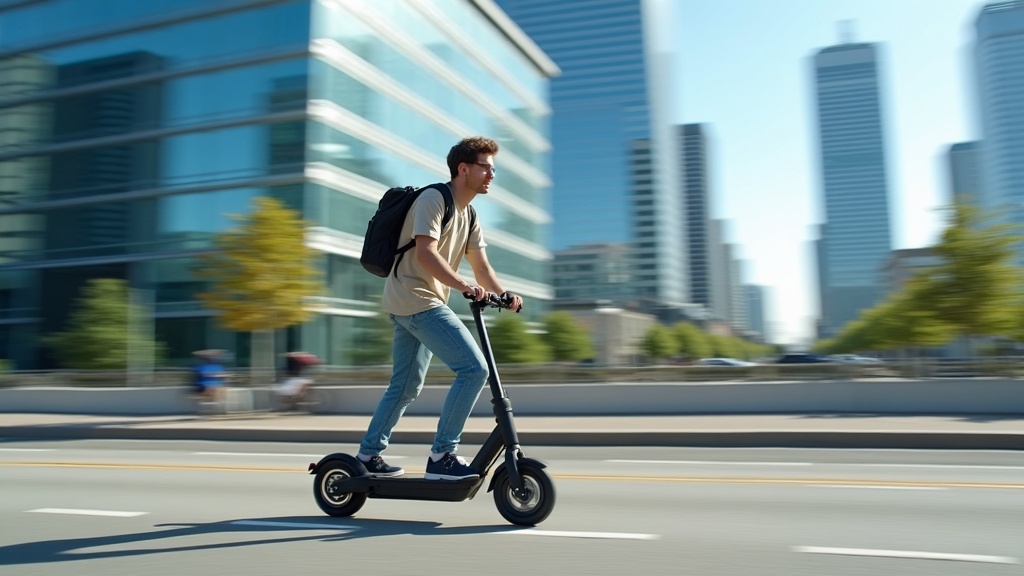
Quick Summary: Top 5 No-License Models at a Glance
If you’re not sure which one to buy, here’s the bottom line upfront. We’ve handpicked only models that meet the Specified Small Motorized Bicycle category established by the revised Road Traffic Act (effective July 2023) — meaning a max speed of 20 km/h or less and a rated output of 0.6 kW or less.
Comparison Table: 5 Models (Price Range, Top Speed, Range, Weight, Street Legal)
| Model | Price Range | Top Speed | Range | Weight | Street Legal |
|---|---|---|---|---|---|
| Segway-Ninebot E2 Plus | See official site for details | 20 km/h | See official site for details | See official site for details | ○ (Specified Small) |
| Segway-Ninebot MAX G2 D | See official site for details | 20 km/h | See official site for details | See official site for details | ○ (Specified Small) |
| Xiaomi Electric Scooter 4 Lite 2nd Gen | See official site for details | 20 km/h | See official site for details | See official site for details | ○ (Specified Small) |
| SWALLOW Kickboard Pro | See official site for details | 20 km/h | See official site for details | See official site for details | ○ (Specified Small) |
| Terra Motors SEED Pro | See official site for details | 20 km/h | See official site for details | See official site for details | ○ (Specified Small) |
Note: Always verify the exact specs and current pricing for each model on the official website or at your retailer. Regulatory compliance status is subject to change.
Which One Is Right for You? A Use-Case Guide
- Commuting 1–3 km to the station — Prioritize a foldable, lightweight model. Check with your train operator whether you can bring it on board.
- Casual weekend rides instead of cycling — Focus on range and ride comfort (tire size and suspension).
- Beginners on a budget — Start with an entry-level model to get a feel for how it handles before committing to a higher-end option.
- Living in a hilly area — Pay attention to motor output (within the 0.6 kW limit) and battery capacity.
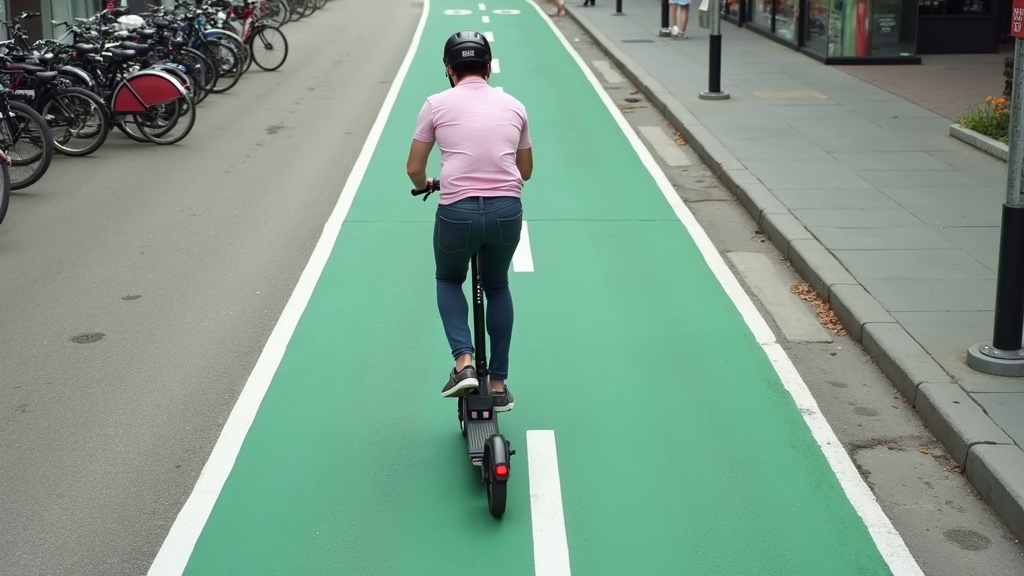
Specified Small Motorized Bicycles are required to ride in designated bicycle lanes or on the left side of the road. Riding on sidewalks is generally prohibited. The exception is “Specified Exception Mode” (max 6 km/h), which allows sidewalk use under certain conditions. Make sure the model you’re considering supports this mode switch before you buy.
How Japan’s Law Change Transformed Electric Scooters
If you still think you need a license to ride an electric scooter, you might be working off outdated information. The revised Road Traffic Act, which took effect on July 1, 2023, completely rewrote the rules for electric scooters in Japan.
Before vs. After: License, Helmet, and Where You Can Ride
Under the old rules, most electric scooters were classified as mopeds — which meant you needed a moped license, a helmet was mandatory, and you could only ride on the road. Under the new framework, models that qualify for the updated category no longer require a license, helmets are encouraged but not legally required, and bike lanes are now an option.
Key Changes Before and After the Revision
- Driver’s license: Required (moped) → Not required (Specified Small category only)
- Helmet: Mandatory → Strongly recommended (voluntary, no penalty)
- Where you can ride: Road only → Road + bike lanes (sidewalks allowed under conditions)
- Age restriction: Under 16 is now explicitly prohibited
What Is a “Specified Small Motorized Bicycle”? The Legal Requirements, Simply Explained
The revised law defines a “Specified Small Motorized Bicycle” as a vehicle that must meet specific hardware requirements. Any model that falls outside these criteria — no matter how similar it looks — does not qualify for the no-license benefit. These are essential checkpoints before you buy.
Requirement 1
Designed and electronically limited to a maximum speed of 20 km/h or less
Requirement 2
Equipped with a motor with a rated output of 600 W or less
Requirement 3
Bears a type certification number sticker on the vehicle body (proof of compliance with safety standards)
Additionally, models with a “sidewalk mode” that limits speed to 6 km/h or below are classified as “Exception Specified Small Motorized Bicycles” and are permitted on sidewalks. However, pedestrians always have the right of way on sidewalks, so in practice, bike lanes and the left edge of the road are your go-to routes.
The Complete Guide to Road Rules
“I don’t know where I’m allowed to ride.” “I’m too worried about getting a ticket to actually use it.” These are common concerns. The 2023 revision actually simplified things by formally classifying electric scooters as “Specified Small Motorized Bicycles” — but you do need to understand how the available riding zones change depending on your speed mode.
Where You Can and Can’t Ride (Sidewalks, Roads, and Bike Lanes)
Where you’re allowed to ride depends on your speed setting. In general, your main riding areas are the left side of the road and designated bike lanes.
【Quick Reference: Riding Zones by Speed Mode】
- Normal mode (max 20 km/h): Road (left side) / Bike lane ◎ / Sidewalk ✕
- Pedestrian mode (max 6 km/h): Road (left side) / Bike lane ◎ / Sidewalk ◎ (where signage permits)
- Either mode: Highways / Motorways ✕
Sidewalk riding is only permitted on sections marked with a “Bicycles and Pedestrians Only” sign. Riding on unmarked sidewalks — even on your familiar daily commute route — is a violation, so always check the signage.
Speed Limits and When You Must Switch to Pedestrian Mode (6 km/h)
The maximum speed for normal riding is 20 km/h. Any product capable of exceeding this is not classified as a Specified Small Motorized Bicycle and falls under a different vehicle category. Always confirm the maximum speed setting before purchasing.
When entering a sidewalk section with the appropriate signage, you are required to switch to Pedestrian Mode (max 6 km/h) using the handlebar switch or a companion app. Failing to switch and riding on the sidewalk at normal speed is treated as a standard Road Traffic Act violation.
Forgetting to switch to pedestrian mode is an easy mistake to make. Build a habit of switching before you reach the sidewalk — not after you’re already on it.
Insurance, License Plates, Lights, and Other Required Equipment
Riding a Specified Small Motorized Bicycle on public roads requires the same legally mandated equipment as a moped.
4 Required Items for Street Legal Riding
- Mandatory liability insurance (JibaikiSekiHoken) — Riding uninsured is a violation and leaves you without coverage in an accident.
- License plate — Must be obtained and displayed (register at your local municipal office).
- Front and rear lights — Required at night; recommended during the day as well.
- Helmet — Strongly encouraged for riders 16 and older; no penalty for non-compliance.
Getting your license plate is straightforward — just visit your local municipal office, and some retailers will handle the registration for you. It’s easy to put off, but riding without a plate is considered an unregistered vehicle and can result in a citation. Take care of it before your first ride.
Mandatory liability insurance covers the minimum for personal injury claims. If you want broader protection for property damage or higher personal injury coverage, consider looking into supplemental voluntary insurance as well.
How to Choose the Right Electric Scooter Without Regrets
Once you’ve got the road rules down, it’s time to find the model that fits your lifestyle. Buying based on specs alone often leads to regret — “it’s too heavy to carry every day” or “the battery dies before I get home.” Narrow down your options with these four key criteria.
Range and Charge Time: Work Backward from Your Commute Distance
Real-world range is typically 20–30% lower than the advertised figure. Body weight, road surface, temperature, and speed all play a role, so multiply the spec sheet number by 0.7–0.8 for a realistic estimate.
How to Work Backward from Your Needs
- Up to 3 km one way: 15+ km range is plenty — charging 2–3 times a week will do.
- 5–8 km one way: Aim for 25+ km range; ideally charge time under 4 hours.
- Daily round trips: Look for a high-capacity battery model, or plan to charge at work.
When evaluating charge time, don’t just look at “hours to full charge” — think about whether you can plug it in when you get home and have it ready by morning. Fit it into your actual daily routine.
Weight and Foldability: Choosing Based on How You’ll Carry and Store It
Entry-level electric scooters typically weigh around 10–13 kg, while models with larger batteries can exceed 15 kg.
Even “foldable” models vary widely — the folded dimensions and shape may make it impractical to take on a train or store in an entryway. We strongly recommend checking the folded dimensions beforehand and mentally walking through your actual daily routine with the scooter in hand.
- Can it stand upright or only lie flat when folded?
- Does only the handlebar fold, or does the entire deck fold as well?
- Is it light enough to carry with one hand? Does it have a carry handle?
Tire Type (Pneumatic vs. Solid) and How It Affects Your Ride
Choosing a tire type is a trade-off between ride comfort and maintenance. Neither is objectively better — the right choice depends on how and where you plan to ride.
Pneumatic (Air-Filled) Tires
Air absorbs bumps and rough pavement for a much smoother ride. The downside: puncture risk and the need for regular tire pressure checks. Best suited for commuting on roads that aren’t perfectly smooth.
Solid (Puncture-Proof) Tires
No flats, virtually zero maintenance. The trade-off is that vibrations transfer directly to the rider, making long rides more tiring. Ideal for short trips on flat, well-paved urban streets.
After-Sales Support and Warranty: Why Checking for a Domestic Distributor Matters
Electric scooters contain complex electronic components. If something goes wrong after purchase and there’s no domestic distributor, sourcing replacement parts or getting support can take weeks — or even months.
Make sure to check the following before you buy.
Check whether the official website or product listing includes a Japanese-language contact.
Battery and frame warranties are often different — confirm each one separately.
Look up reviews and user feedback on after-sales service before committing to a purchase.
Choosing purely on price puts you at risk of ending up with a model that has no practical repair support. If you plan to use it long-term, after-sales support deserves just as much weight in your decision as the price tag — if not more.
Top 5 Electric Scooters for 2026
Based on the five key criteria covered in the previous section, we’ve handpicked the best models that meet Japan’s Type 1 Small Motorized Bicycle safety standards — one for every type of rider. Whether you’re a first-timer or a daily commuter, there’s a model here that fits your priorities.
#1: Segway Ninebot KickScooter E2 Plus — The Go-To Starter Model for Beginners
The E2 Plus is the top pick for riders who just want to get started. It earns trust from the Segway brand name and wins fans with its easy-to-handle size. The one-handed folding mechanism makes it a natural fit for multimodal commutes — fold it up, hop on the train, and you’re good to go.
Who it’s best for
- First-time electric scooter riders who want to jump in without overthinking it
- Short-distance trips (one way: 3–5 km)
- Riders who prioritize a compact, portable design
Drawbacks to know before you buy
- Range is tighter compared to higher-end models
- On hilly terrain, you may occasionally notice the motor reaching its limits
For the latest specs on price, range, and weight, check the Segway official website. Sales and promotions run fairly often, so timing your purchase can make a real difference on price.
Check Amazon for the latest pricing and availability. As one of the best no-license electric scooters for public roads, it offers excellent value — especially if you’re considering it for your daily commute.
#2: Segway Ninebot KickScooter F2 Pro — The Long-Range Commuter Favorite
The F2 Pro is built for riders who use it every single day. Its larger battery gives you the range to handle a 10 km one-way commute without stressing about running out of charge. The bigger tires also soak up road imperfections noticeably better than the E2 Plus — a clear step up in ride comfort.
Who it’s best for
- Daily commuters riding from the station to the office
- Riders who want to skip the evening charge or don’t have a convenient charging setup
- Urban riders who need stable handling on uneven city streets
Drawbacks to know before you buy
- Heavier than the E2 Plus — carrying it up stairs is more of a workout
- The higher price tag may not be worth it if you ride infrequently
Range, weight, and price can vary depending on your riding conditions and environment. We recommend checking the official spec sheet and, if possible, scheduling a test ride at a local dealer before committing.
Check the link below for the latest pricing and availability. You can also find full specs and included accessories on the product page.
#3: Segway Ninebot KickScooter F2 — The Well-Rounded Middle-Class Option
The F2 sits right between the E2 Plus and F2 Pro. It’s the answer for riders who refuse to compromise on either range or ride quality. Of all the models in the lineup, it strikes the most balanced triangle of price, performance, and weight.
Who it’s best for
- Mid-distance commuters riding 3–5 days a week (one way: 5–8 km)
- Riders who also want to use it for weekend leisure rides
- Anyone who wants an F2 Pro-like experience at a lower price point
Drawbacks to know before you buy
- If the price gap between the F2 and F2 Pro is small at the time of purchase, the F2 Pro will likely deliver better long-term satisfaction
- Always compare current prices for both models before making your final call
The Segway Ninebot KickScooter F2 offers one of the best balances of price and performance among no-license-required electric scooters for public roads. Check the official product page for the latest pricing and full specs.
#4: Xiaomi Electric Scooter 4 Pro — Best Bang for Your Buck
Xiaomi’s cost-control expertise — honed through years in the smartphone industry — carries over directly into their electric scooters. The Electric Scooter 4 Pro pairs solid hardware with app connectivity, letting you track ride data and customize speed settings right from your phone.
Who it’s best for
- Riders who want app integration without paying a premium
- Anyone already invested in the Xiaomi product ecosystem
- Those who want Pro-level performance at a more accessible price
Drawbacks to know before you buy
- After-sales support in Japan may be thinner than Segway’s — confirm warranty and repair options before purchasing
- Replacement parts availability is more limited than domestic brands or some Western brands
Compliance with Japan’s Type 1 Small Motorized Bicycle standards can vary by production lot and sale period. Always confirm compliance with the retailer at the time of purchase.
Check the link below for the latest pricing along with detailed specs on range, top speed, and more.
#5: Xiaomi Electric Scooter 4 — Full Features Without the Entry-Level Compromises
The Xiaomi Electric Scooter 4 sits at the more accessible end of the price spectrum, yet still comes fully equipped with a folding mechanism, front and rear brakes, and LED lighting. This one isn’t for riders who just want “the cheapest option” — it’s for those who want to spend less without giving up the features that actually matter.
Who it’s best for
- Budget-conscious riders who still want a practical, capable scooter
- Short-distance trips (one way: under 3 km)
- First-timers who aren’t sure how often they’ll ride and don’t want to over-invest
Drawbacks to know before you buy
- Range and motor output are noticeably behind the Pro model
- If you’re planning to use it for daily commuting, the Pro model may offer better long-term value
Prices and stock levels across Amazon, Rakuten, and the official store fluctuate regularly. Make sure to check multiple channels before buying.
Check the link below for the latest pricing and availability, along with real-world commuting performance and detailed specs.
Comparison Table: All 5 Models at a Glance
Here’s a side-by-side breakdown of the five models introduced earlier. Trade-offs like “affordable price but shorter range” or “lightweight but slow to charge” only become clear when you see everything in one place. Use this as your final checklist before buying.
Spec Comparison: Top Speed, Range, Charge Time, Weight, and Tire Size
To qualify for road use as a specified small moped, Japanese law requires a top speed of 20 km/h or less and a motor output of 600W or less. Every model in this comparison meets those requirements.
How to Read the 5 Comparison Categories
- Top Speed: Check whether the model supports switching between road mode (6 km/h) and standard mode (20 km/h)
- Range: Manufacturer figures are based on eco mode on flat roads. Expect around 70–80% of the stated range in real-world conditions
- Charge Time: Fast-charging support makes a big practical difference in daily usability
- Weight: Anything over 15 kg can be a hassle to carry around
- Tire Size: 8 inches or larger helps absorb bumps and rough road surfaces more effectively
Specs can change depending on the manufacturer or production run, so always verify the latest figures on the official product page before purchasing. This category is also known for a significant gap between catalog specs and real-world performance, so checking buyer reviews alongside the official specs is a smart move.
Price Range and Where to Buy: A Quick Reference Guide
Where you buy an electric scooter can significantly affect your warranty coverage and after-sales support. It’s especially important to know who to contact if you ever need a repair or replacement part.
3 Things to Consider When Choosing Where to Buy
- Official website or authorized retailer: Best warranty and customer support. Often pricier outside of sales periods
- Amazon or Rakuten (authorized sellers only): Easy price comparison with real-time stock visibility. Always verify the seller is an authorized dealer
- Electronics retailers (Yodobashi, Bic Camera, etc.): May allow test rides or in-person inspection. Factor in reward points when calculating the actual price
Entry-level models typically run ¥50,000–¥80,000, while mid-range models with better range and features fall in the ¥100,000–¥150,000 range. Be cautious with unusually cheap parallel imports—verify whether they carry the required technical certification marks (Giteki and PSE) and come with proper warranty support. Always check whether the product listing confirms technical standards compliance certification before buying.
Common Questions Before You Buy (FAQ)
Once you’re ready to pull the trigger, questions start piling up fast: “Do I need a helmet? What about insurance?” This section tackles the four questions first-time buyers struggle with most, with clear answers grounded in current regulations.
Q. Is wearing a helmet mandatory?
For specified small mopeds (license-free electric scooters), helmet use is classified as a “best effort” obligation—meaning there’s no legal penalty for riding without one. That said, head protection in a fall is no small thing, and wearing a helmet is strongly recommended. A standard bicycle helmet is perfectly acceptable. Don’t let “no penalty” become an excuse to skip it—the risk is real.
Q. Do I need to carry compulsory liability insurance (jibaiseki hoken)?
Yes—compulsory liability insurance (jibaiseki hoken) is required by law for specified small mopeds. You’ll need to handle this at the same time you register for your license plate. Riding without it is a traffic law violation, so take care of the paperwork as soon as you purchase. Given the accident risk, voluntary supplemental insurance is also worth considering.
Q. Can I ride in the rain? How do I check waterproofing?
Waterproofing varies significantly between models. The key spec to look for is the IP (Ingress Protection) rating.
- IPX4 or higher: Resistant to water splashing from any direction — fine for light rain
- IPX5 or higher: Protected against water jets — more reliable in a sudden downpour
- No IP rating listed: Avoid riding in wet conditions entirely
Always check the IP rating on the official spec page before buying.
Q. How do I protect against theft?
1
Use a U-lock combined with a chain lock to secure the scooter to a fixed structure
2
Attach a GPS tracking device to the frame so you can monitor its location at all times
3
For extended parking, store indoors as your default and avoid leaving it outside overnight
Given the price of these scooters, theft is a risk you can’t afford to ignore. Think of investing in good locks the same way you’d think about insurance—it’s a necessary cost of ownership.
Final Verdict: The Best Electric Scooters to Buy in 2026
Top Picks by Use Case and Budget
We’ve covered specs, regulations, and the most common buyer questions—now let’s cut to the chase. If you’re still not sure which model to go with, here’s a straightforward breakdown by use case.
Quick Reference: Best Pick by Use Case and Budget
- Daily commute or school run (up to 3 km): Prioritize foldability and light weight. Choose a road-legal model certified as a specified small moped
- Weekend rides and cycling paths: Prioritize range and ride comfort. A model with suspension will make the experience noticeably more enjoyable
- Last-mile from the train station: Confirm the folded weight is manageable enough to bring on a train (aim for around 10 kg or less)
- Road use is a must: Always choose a model officially certified as a specified small moped. Confirm with the manufacturer that all required safety components are included before buying
On the budget side, road-legal models tend to cost more than off-road or private-property-only models because they include the required safety components. Going with the cheapest option can backfire—retrofitting safety parts after the fact often costs more than just buying the right model upfront.
Always Check the Official Site for Current Specs Before You Buy
The electric scooter market moves fast. Even the same model can receive firmware updates or spec revisions at any time. The information in this article reflects what was current at the time of writing, and details like price, weight, and range are subject to change.
Final Pre-Purchase Checklist
- Confirm the current specs and price on the manufacturer’s official website
- Verify the model is certified as a “specified small moped” under Japanese law
- Understand the insurance enrollment process (TS Mark insurance or compulsory liability insurance)
- Save the contact information for the retailer or manufacturer’s support team
This is a category where regulations and technical standards are constantly evolving. Always go straight to the official source for the most accurate, up-to-date information before making your purchase.