Best Dishwashers 2026: Top 7 Picks — Summary & Quick Reference
“I have no idea which one to choose” — that’s the most common complaint when shopping for a dishwasher. There are multiple types to consider: countertop, built-in, and drawer-style. Even within the countertop category, tank-fill and direct-connect (branch faucet) models work quite differently in daily use. Let’s start with a quick-reference table and the core selection criteria so you can zero in on the right model for your situation as efficiently as possible.
Quick Reference: Recommended Models by Type, Household Size, and Budget
| Type | Best For | Installation | Price Range | Ideal If You… |
|---|---|---|---|---|
| Countertop (Tank-fill) | 1–2 people | None required | $200–$400 | Rent / have limited counter space |
| Countertop (Direct-connect) | 2–4 people | Faucet connection only | $250–$600 | Want daily use / hate refilling manually |
| Built-in | 3–5+ people | Professional installation required | $800+ | Large family / new construction / renovation |
Price ranges reflect the general Japanese market as of March 2026. Prices can vary significantly during sales or for previous-generation models, so always check current prices at each retailer before purchasing.
3 Key Factors to Consider (Type / Capacity / Installation Environment)
If you’re renting and can’t modify your plumbing, a tank-fill model is your only option. Direct-connect models may require landlord approval, so check your lease agreement before deciding.
Manufacturer-listed place setting counts include small plates as individual items, so the numbers tend to look higher than what you’ll experience in practice. For a two-person household, aim for at least 18 place settings.
Most countertop models are around 22 inches wide, and you’ll also need extra depth (roughly 2–4 inches) for the drain hose once installed. Always measure before buying.
How to Choose a Dishwasher: 5 Checkpoints to Avoid Regret
“I bought it and then realized it wouldn’t fit.” “It wasn’t big enough and I had to replace it right away.” — The most common dishwasher regrets come down to not doing enough research before purchasing. What matters more than impressive specs is whether the machine actually fits your space and lifestyle.
5 Criteria Covered in This Section
① Type (installation method) ② Capacity ③ Installation requirements ④ Drying method ⑤ Running costs
Countertop vs. Tank-fill vs. Built-in: Differences and Who Each Is For
Dishwashers fall into three main categories. Since each differs significantly in terms of installation requirements and day-to-day usability, narrowing down your type first is the most important step.
| Type | Key Features | Best For |
|---|---|---|
| Countertop (Direct-connect) | Connected directly to water supply — no manual refilling | Renters planning long-term use in the same space |
| Tank-fill (No installation) | Water is poured manually into a reservoir | Those wanting to try a dishwasher first, or who plan to move |
| Built-in | Integrated into cabinetry, large capacity | Those building a new home or planning a kitchen renovation |
Countertop direct-connect models require a branch faucet adapter to be installed on your tap, but once set up, operation is as simple as pressing a button. Tank-fill models are appealing for their zero-installation convenience, but the need to manually add water and deal with drainage every cycle is an easy-to-overlook downside.
Capacity Guide by Household Size (1–2 / 3–4 / 5+ People)
Dishwasher capacity is measured in place settings, but counting methods vary by manufacturer, so treat these figures as rough guidelines rather than exact comparisons.
In real-world use, your actual capacity needs will vary greatly depending on whether you’re loading cookware and large pots. A good rule of thumb: households that cook frequently should size up one level to avoid regrets.
Installation Requirements and What to Watch Out For with No-Install Models
Tank-fill models are often assumed to work “anywhere,” but there are some easy-to-miss requirements.
- Can the drain hose reach the sink? (Measure the distance between the unit’s placement and your sink beforehand)
- Check the weight capacity of the installation surface (total weight including water is heavier than you might expect)
- Distance to the nearest outlet and whether an extension cord is needed
- Door swing direction and clearance above the unit (drawer-style models require adequate ceiling height)
The most commonly overlooked issue is drain management. Most models loop the drain hose over the edge of the sink, and depending on where you place the unit, the hose may not reach. Always measure your intended installation space before purchasing.
Heated Drying vs. Fan Drying vs. Zeolite Drying: What’s the Difference?
The drying method directly affects electricity consumption, drying performance, and how well plastic items dry.
| Drying Method | Performance | Electricity Cost | Plastic Drying |
|---|---|---|---|
| Heated drying | Excellent | Higher | Fair (risk of heat deformation) |
| Fan drying | Fair (water droplets may remain) | Lower | Fair |
| Zeolite drying | Excellent (great on plastics too) | Lower | Excellent |
Zeolite drying — which uses a moisture-absorbing mineral material — is featured in Panasonic’s premium models. Rather than using a heating element, it draws out moisture through adsorption, reducing energy consumption significantly. This method is particularly well-suited for households that regularly wash plastic containers and food storage lids.
How to Estimate Your Electricity and Water Costs
“Will a dishwasher raise or lower my utility bills?” — This is one of the most important questions to answer before buying. Here’s a framework for estimating your costs.
Basic Estimation Formulas
Electricity cost: Power consumption (kWh) × daily cycles × electricity rate (per kWh) × 30 days
Water savings: Water used hand-washing (L) − water used by dishwasher (L) × water rate per liter
Electricity and water rates vary by region and utility plan — check your most recent utility bill for your specific rates.
When it comes to water savings, most reports show that dishwashers use significantly less water than hand-washing. However, if you pre-rinse dishes before loading, the water savings shrink considerably — so how much pre-rinsing you can skip is the real driver of cost savings. Each manufacturer’s product page lists estimated power consumption and water usage per cycle, so be sure to compare these figures when evaluating models.
Top 4 Countertop & Tank-Type Dishwashers — No Installation Required
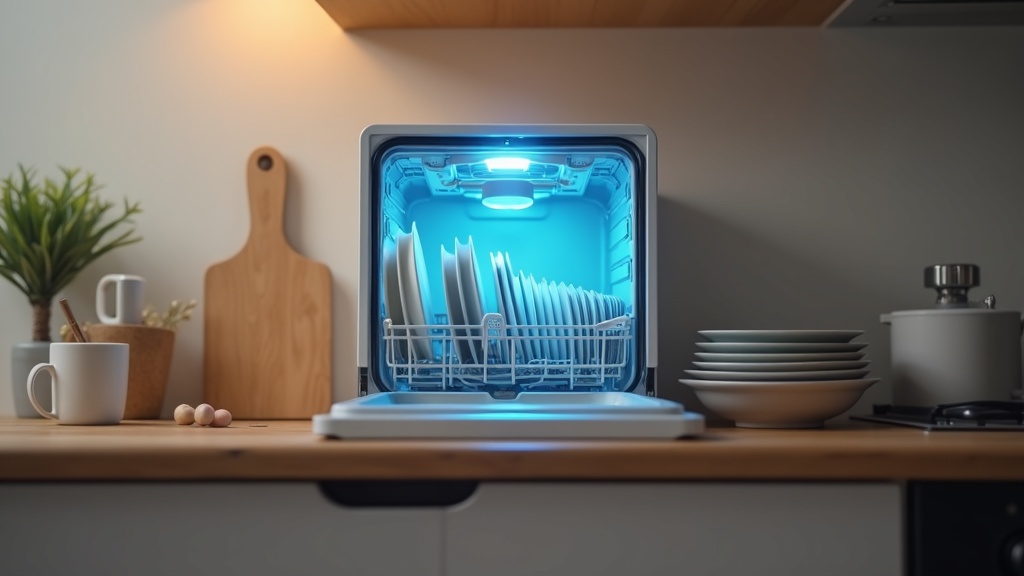
Based on the selection criteria covered in the previous section, here are our top picks for installation-free dishwashers — ideal for renters and those living alone. Each model was evaluated across three key factors: placement flexibility, water supply method, and capacity. Use these as a guide to find the best fit for your living situation.
Panasonic NP-TZ300 — The Countertop Standard
A long-standing favorite in the countertop dishwasher category. This model connects directly to your faucet via a diverter valve, so there’s no manual refilling needed — making it easy to use every single day. It features an auto door-open drying system that automatically cracks the door open after the wash cycle, releasing moisture and helping dishes dry more effectively.
Key Highlights
- Auto door-open drying reduces condensation and gets dishes drier
- Stream Sanitizing Wash uses high-temperature water for a deep clean
- Backed by Panasonic’s reliable parts and repair support network
Things to Keep in Mind
- Requires a diverter valve installation — renters should check with their landlord first
- On the larger side for a countertop model, so make sure you have enough counter space near the sink
- Priced higher than most countertop models — check the official site for current pricing
If you want a high-capacity dishwasher that handles your daily load with ease, check the latest prices and availability online. It’s also a useful reference point for estimating installation costs if you’re planning a renovation or new build.
Panasonic NP-TSP1 — Tank-Type Freedom, No Plumbing Needed
This tank-type model requires no plumbing work whatsoever — not even a diverter valve. Just manually fill the built-in tank with water and you’re ready to go, which means you can place it virtually anywhere in your kitchen. It’s a great choice for singles with fewer dishes to wash, or for anyone who wants to try out a dishwasher before committing to a permanent setup.
Key Highlights
- Works anywhere with an outlet — no restrictions based on kitchen layout
- No diverter valve needed, so renters can set it up immediately
Things to Keep in Mind
- You’ll need to manually refill the tank every time — not ideal if you want a completely hands-off experience
- Limited tank capacity means fewer dishes per load — not suited for families
For the latest pricing and full specs on the Panasonic NP-TSP1, check the official website or retailer listings. It’s also worth looking into shipping costs and warranty terms before you buy.
Siroca SS-M151 — Best Value Tank-Type for Budget Shoppers
If you want a tank-type dishwasher without the premium price tag, the Siroca SS-M151 is worth a look. It retails below the major domestic brands, making it an accessible entry point for first-time dishwasher owners.
Key Highlights
- Solid balance of features and price for an entry-level model
- Tank-type design means no plumbing work — renter-friendly right out of the box
Things to Keep in Mind
- Drying is fan-based only — results won’t be as thorough as heater drying
- Compact interior limits how much you can wash in one load — not great for batch washing
- Check the official site or retailer for exact specs and current pricing
Despite its compact size, the Siroca SS-M151 handles sanitizing and drying in one cycle. Check the official site or major shopping platforms for the latest price and full specifications.
Iris Ohyama ISHT-5000-W — For Those Who Want to Start Without Overspending
If you’re curious about dishwashers but hesitant to spend a lot upfront, the Iris Ohyama ISHT-5000-W is a natural starting point. It’s widely available at electronics retailers at a relatively low price point, making it an easy way to dip your toes into dishwasher life without a big financial commitment.
Key Highlights
- Low price point makes it a great option for minimizing upfront costs
- Simple controls — easy to use even if you’re not tech-savvy
Things to Keep in Mind
- Washing power and drying performance are honestly a step below higher-end models
- If you plan to use it long-term, run the numbers — a Panasonic model may offer better overall value
- Check the official product page for exact specs and dishware capacity
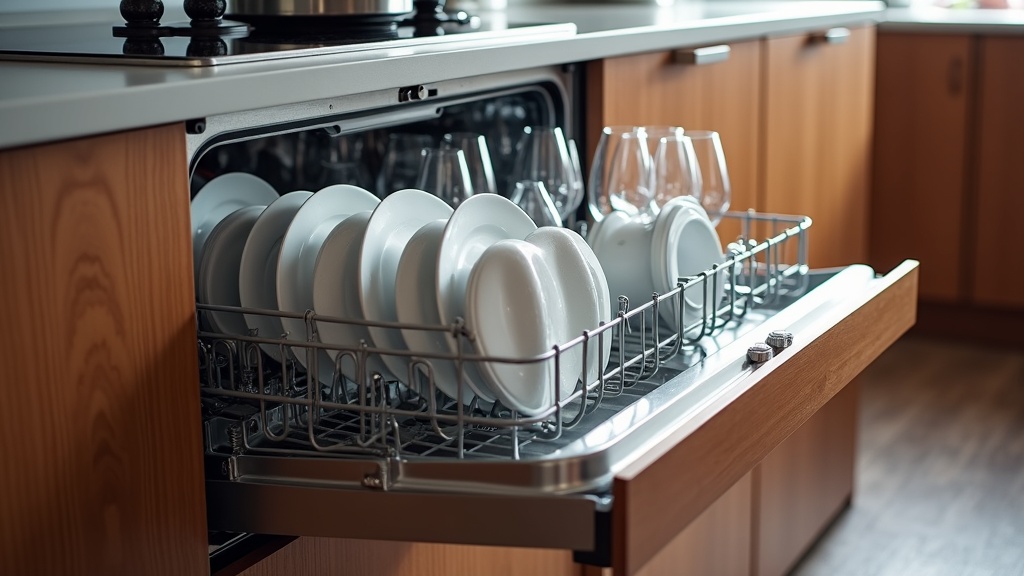
For the latest pricing and full specs, visit the official product page or your preferred shopping platform. Despite its compact size, this model can handle up to 5 place settings — check user reviews alongside the specs to get a full picture of real-world performance.
Top 3 Built-In Dishwashers
Countertop models are convenient, but once your household grows to three or more people, the limited interior space and the hassle of refilling the water tank start to wear on you. Built-in dishwashers tuck neatly into your cabinetry, freeing up counter space while delivering high capacity and advanced features.
What to check before choosing a built-in model
Installation requires a kitchen remodel. In most cases, built-ins cannot be installed in rental properties. This type is best suited for homeowners planning a renovation or those building or replacing a home.
Panasonic NP-45KD9S | Top-Tier Reliability from Japan’s Market Leader
This is Panasonic’s flagship dishwasher, a brand that consistently holds one of the top market shares in Japan. Its proprietary “Stream Sterilization Wash” directs water flow into every corner of the interior, minimizing residue and food particles left behind.
- nanoe X technology handles odor elimination at the same time as washing
- EcoNavi automatically adjusts water volume and temperature for energy-efficient operation
- Extensive repair support at major appliance retailers gives you peace of mind for long-term use
- The unit price is on the higher end — confirm the total cost including installation before committing
- Uses heater drying, which tends to result in slightly higher electricity bills
For specific pricing and specs, please check the official website or contact an installation contractor.
If you want to check the latest pricing and availability, take a look at the Panasonic NP-TZ300 product page. You can also find details on proprietary features like the automatic strainer cleaning on the official site.
Rinnai RSW-C402C | Superior Drying Performance from a Gas Appliance Expert
Rinnai, a brand renowned for water heaters and gas cooktops, brings that same expertise to dishwashers. The standout feature is its “high-temperature drying,” which leverages hot water effectively to dry everything thoroughly — including plastic containers. If you’ve ever opened the dishwasher to find your Tupperware still soaking wet, this machine is the answer.
- High-temperature rinse achieves sterilization and drying in one step
- Works exceptionally well with gas water heaters — optimizing the hot water temperature maximizes wash efficiency
- Less widely carried at appliance retailers compared to Panasonic, so getting a quote can take more effort
For detailed specs and compatible models, refer to the official website.
If you want to check the latest pricing and detailed specs for the Rinnai RSW-C402C, it’s worth taking a look before you commit. Getting a realistic sense of the total cost including installation will make budgeting much easier.
Mitsubishi Electric EW-45R1S | Quiet Operation for Late-Night Use
Designed for households that find dishwasher noise too disruptive to run at night, this quiet model keeps operating sound to a minimum. It’s an ideal choice for families who want to run it after the kids are asleep or late in the evening.
- Low-noise design works well in open-plan kitchen-dining layouts where sound carries easily
- A straightforward control panel with fewer features means a lower risk of mechanical failure
- Fewer standout features compared to Panasonic and Rinnai models
- Availability is somewhat limited, and installation contractors may be harder to find depending on your area
Check the official website for actual noise level ratings and compatible cabinet dimensions.
If you’re curious about the energy efficiency and slim 45cm body specs that Mitsubishi Electric is known for, check the latest pricing and availability alongside the detailed specs.
Spec Comparison Chart for All 7 Models | Capacity, Power Consumption & Drying Method at a Glance
We’ve introduced each of the seven models individually — now let’s line them up side by side. When you can see all the specs in one place, narrowing down “which one is right for me” becomes much easier.
※ Note: Prices and specs are subject to change depending on the retailer or manufacturer. Always check the official website or store for the latest information before purchasing.
Countertop Model Spec Comparison (4 Products)
For countertop models that require no installation, the key differences come down to capacity and drying method. Pay close attention to drying: heater drying and fan drying produce noticeably different results.
| Model | Interior Capacity | Place Settings (Approx.) | Drying Method | Water Supply |
|---|---|---|---|---|
| Panasonic NP-TZ300 | Standard | ~5 person servings | Heater + Fan | Auto-fill & tank both supported |
| Panasonic NP-TA4 | Compact | ~4 person servings | Heater Drying | Diverter valve & tank both supported |
| Iris Ohyama ISHT-5000 | Compact | ~3–4 person servings | Fan Drying | Tank-fed |
| Thanko Raqua mini | Ultra-Compact | ~1–2 person servings | Air Dry | Tank-fed |
Drying Method Breakdown: Heater drying uses hot air for fast, thorough results. Fan drying takes a bit longer but uses less electricity. Air drying is found on the most budget-friendly models where cost is the top priority.
Built-In Model Spec Comparison (3 Products)
For built-in models, the main criteria are capacity, noise level, and drying performance. Keep the total cost — including installation — in mind as you compare.
| Model | Place Settings (Approx.) | Drying Method | Width | Key Features |
|---|---|---|---|---|
| Panasonic NP-45KD9S | ~6 person servings | Mist Sanitizing + Drying | 45 cm | Low noise, Econavi system |
| Rinnai RSW-F402C | ~6 person servings | Warm Air Drying | 45 cm | High-temp rinse, water-saving performance |
| LIXIL PT-V4553UWL | ~5–6 person servings | Fan Drying | 45 cm | Renovation-compatible, shallow design |
Important: For exact specs, pricing, and compatible models for built-in units, please consult a renovation contractor or the manufacturer’s official website. Available models vary depending on your installation conditions.
Value-for-Money Rankings by Price Range (Editorial Ratings)
Looking beyond raw specs and ranking by “what you get for your money” can shift your priorities — and sometimes change your pick entirely.
| Price Range | Top Pick | Value Rating | Best For |
|---|---|---|---|
| Under $200 | Thanko Raqua mini | ★★★★☆ | Solo living, first-time dishwasher owners |
| $200–$350 | Iris Ohyama ISHT-5000 | ★★★★☆ | 2–3 person households, budget-conscious buyers |
| $350–$550 | Panasonic NP-TA4 | ★★★★★ | 3–4 person households, ease of use a priority |
| $550+ | Panasonic NP-TZ300 | ★★★★☆ | Larger families who won’t compromise on drying |
| $1,400+ incl. installation | Built-in models | ★★★☆☆ | Planning a full kitchen renovation |
Editor’s Takeaway: Among countertop models, the Panasonic NP-TA4 offers the best all-around balance. If you’re watching your budget, Iris Ohyama is the smart pick. If drying quality is non-negotiable, the NP-TZ300 edges ahead. Built-in models pay off over the long run thanks to lower running costs and the counter space you’ll reclaim.
Setup & Daily Use | Essential Knowledge to Hit the Ground Running After Purchase
Once you’ve narrowed down your choice by specs, it’s surprisingly common to get stuck after delivery — “I can’t figure out the installation” or “What detergent do I need?” This section covers the key points for setup and daily operation so you’re ready to go from day one.
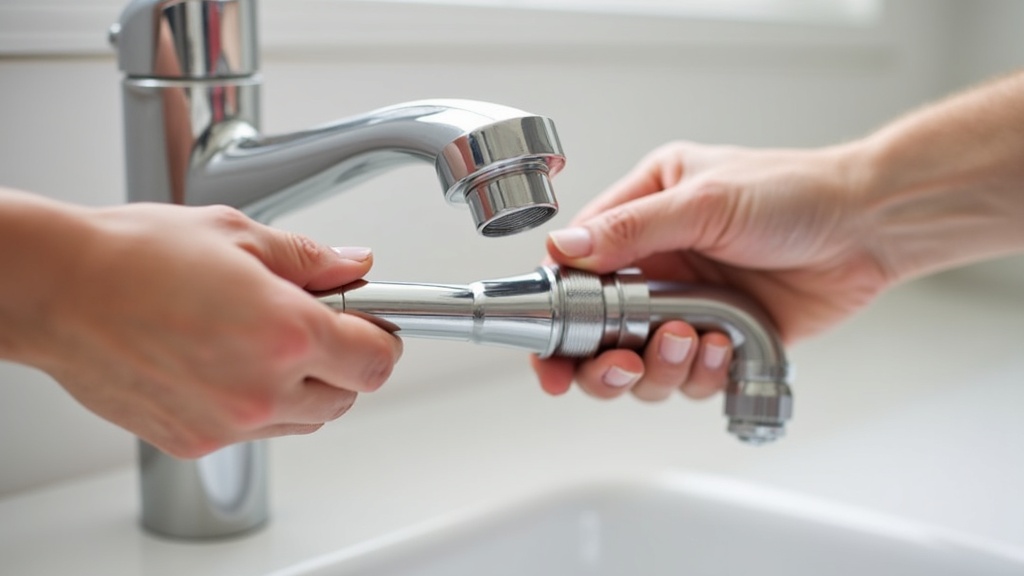
How to Install a Diverter Valve — and How to Check Faucet Compatibility
A diverter valve is an adapter that splits your existing faucet’s water supply to feed the dishwasher. Compatible models differ by faucet manufacturer and model number, so identifying your faucet’s model number is always the first step.
How to Find Your Faucet’s Model Number
It’s often stamped on the faucet body or near the base of the lever. If you can’t find it, contacting the manufacturer’s support line is the most reliable approach.
With the right tools, the whole job typically takes 30 to 60 minutes. If you’re renting, check with your property manager before starting. If your faucet’s model is discontinued, contact the manufacturer’s service center or a licensed plumber for alternatives.
How Tank-Fed Models Work: Filling and Draining
Tank-fed models are hassle-free to set up, but filling and draining are manual tasks every time you use them. Getting familiar with the routine upfront makes daily use much smoother.
- Fill the dedicated tank with tap water — simple as that. Tank capacity varies by model, so check the official specs before you buy
- Draining is typically either into a built-in collection tank or through an included hose routed to the sink
- If the drain hose doesn’t reach your sink, some models support an extension hose (sold separately)
Leaving water sitting in the tank encourages bacterial growth. Get into the habit of draining any remaining water after each use and letting the tank air-dry completely.
Choosing the Right Detergent and How Much to Use
Always use detergent specifically formulated for dishwashers. Regular dish soap produces far too many suds and will overflow inside the machine — there’s no workaround for this.
Dishwasher detergent comes in three forms: tablets, powder, and gel.
| Type | Characteristics | Best For |
|---|---|---|
| Tablets | Pre-measured, one per load — no measuring needed. Tends to cost more per use | Convenience-first users |
| Powder | Best value for money. Easy to adjust the amount for heavily soiled loads | High-frequency households |
| Gel | Dissolves cleanly with no residue. Slightly pricier than powder | Cold-water washes in winter |
Using too little detergent leaves dishes dirty; using too much means it won’t rinse out completely. Start with the recommended amount in your model’s manual, then adjust slightly based on how soiled the load is.
Adding rinse aid alongside your detergent helps prevent water spots after drying. You’ll notice the biggest difference on models with weaker drying performance.
Frequently Asked Questions About Dishwashers
When you’re considering a purchase, practical questions often matter more than specs — like “will this actually work in my home?” Here are answers to the questions we hear most before people buy.
Can I use one in a rental apartment?
Short answer: Yes — tank-fed models work in virtually any rental apartment.
Diverter valve models may require your landlord’s permission, since they involve modifying the faucet. Tank-fed models, on the other hand, need no plumbing work at all — just plug in and fill. They also leave no trace when you move out, making them the practical choice for renters.
If you have your heart set on a diverter valve model, check with your property manager first and get written approval to be safe.
Can plastic or wooden dishes go in the dishwasher?
Some materials require caution.
- Plastic: Generally fine if the item carries a dishwasher-safe symbol. That said, high-heat drying can warp some plastics — it’s safer to skip the drying cycle or use a low-heat setting
- Wood & bamboo: Not dishwasher-safe, full stop. Warping, cracking, and finish damage are virtually guaranteed — this is the universal consensus among manufacturers
- Lacquerware, copper, and tin: Risk of discoloration and warping. Hand-wash only
If a dish or utensil doesn’t have a “dishwasher safe” marking on the bottom, hand-washing is always the safer call.
Does a dishwasher really save water and electricity compared to hand-washing?
The answer depends heavily on how you use it. Many dishwasher models are designed to use less water per cycle than hand-washing — but running a full cycle for just a few items can end up costing more than it saves.
Conditions where savings are most noticeable
- Running the machine once a day with a full load
- Skipping the heated dry cycle and letting dishes air-dry (cuts electricity use significantly)
- Making consistent use of eco mode or water-saving wash cycles
If you prefer to run the machine after every single meal rather than batching loads, the water-saving benefits shrink considerably. Think about your own habits and decide accordingly.
How often does the interior need to be cleaned?
“But who cleans the dishwasher itself?” is a question that catches a lot of people off guard. Here’s a breakdown of the main maintenance tasks and how often to do them.
Skipping filter maintenance leads to odors and reduced cleaning power. On the flip side, if you stay on top of the filter, the interior stays cleaner than most people expect. For tank-fed models, also make a habit of drying out the tank regularly to prevent mold and mineral buildup.
Final Verdict | The Best Dishwasher for Every Lifestyle
We’ve compared dishwashers across capacity, price, and installation type. To wrap things up, here’s our definitive recommendation for each lifestyle. If you’re still on the fence, use this as your guide.
Best Pick for Solo Living & Renters
A countertop model — no installation required, compact, and no direct plumbing hookup needed — is the clear winner here. The fact that you can take it with you when you move is a bigger advantage than it might seem.
What to prioritize for solo living
- Capacity: A compact model handling up to 2–3 person servings (roughly 18–20 items) is plenty
- Water supply: Look for a model that supports both tank-fed and diverter valve options
- Footprint: Measure the depth and height of your kitchen counter before you buy — don’t skip this step
Tank-fed models need no installation at all, but you will be filling them by hand every time. If you plan to keep the machine long-term, having the option to upgrade to a diverter valve connection later makes a meaningful difference in day-to-day convenience.
Best Pick for Couples & Families of 3–4
For two-person households where dishes tend to pile up, a standard-capacity countertop model (designed for 4–5 people) works well — or consider a built-in if you’re open to renovation. For families of three or four, countertop models often fall short on capacity, making a built-in unit worth serious consideration.
Capacity guide by household size
- 2-person household: A standard-capacity countertop model handles it well. Hand-wash pots and pans separately to maximize efficiency
- 3–4 person household: A front-opening built-in unit frees up counter space and delivers better long-term value
3 Things to Check Before You Buy
Measure your installation space
Measure width, depth, and height — and account for door clearance when fully open. More purchases go wrong here than you’d expect, so do this before anything else.
Assess your plumbing and electrical setup
Check whether your faucet can accept a diverter valve, and whether there’s a grounded outlet nearby. Tank-fed models only need a power outlet, but built-in units always require a professional installer.
Think through what you actually need to wash
If you want to fit large pans, pots, or cutting boards inside, interior height is critical. Not all cookware is dishwasher-safe, so check the “dishwasher safe” label on the official product page before purchasing.
Dishwashers are one of those appliances that people rarely go back from once they try them. Narrow your focus to three axes — capacity, installation type, and budget — and the right choice becomes clear on its own. For the latest pricing and availability on any model that catches your eye, check the manufacturer’s official website or your preferred online retailer.