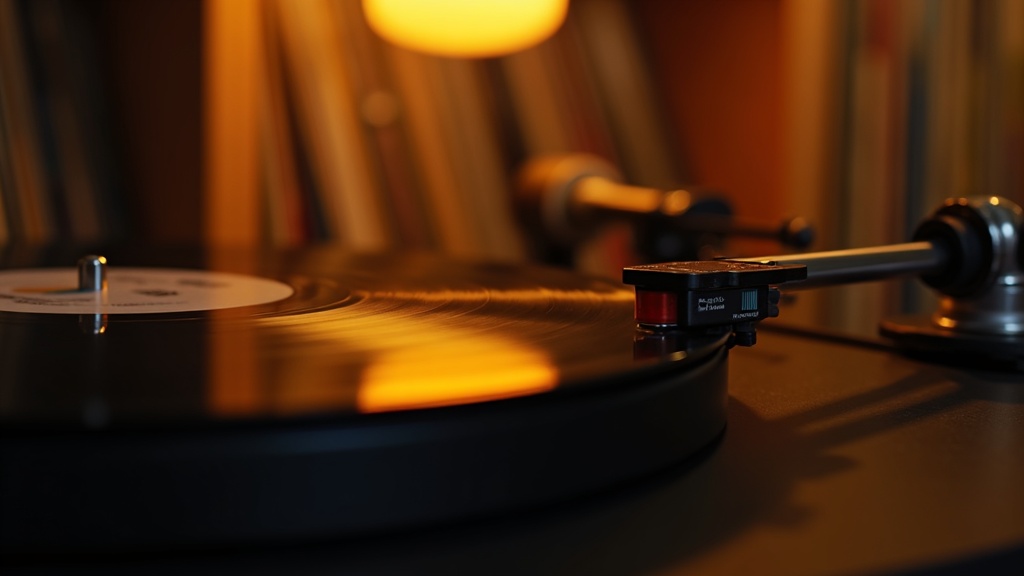
Why Analog Records Are Making a Comeback
In an era where you can instantly stream tens of millions of songs, why do people still bother with the ritual of dropping a needle? That “bother” is actually the very thing drawing modern listeners back in.
Global Vinyl Sales Figures Tell the Story
According to the Recording Industry Association of America (RIAA), U.S. vinyl record sales have been on an upward trend for roughly 18 consecutive years, and since the early 2020s, vinyl has consistently outsold CDs in some years. In Japan, the same momentum is visible — new record shops are opening, and used record stores are thriving across the country.
Key Drivers Behind the Vinyl Revival
- Demand from Gen Z and Millennials for music as a physical object
- A surge in limited vinyl releases from popular artists
- A renewed appreciation for the joy of ownership — artwork and all
The Value of the “Analog Experience” That CDs and Streaming Can’t Offer
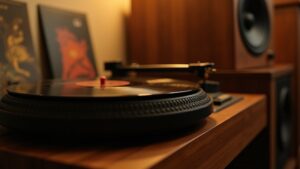
Digital music wins on convenience, but with records, the act of listening becomes a ritual. Taking out the record, cleaning it, and dropping the needle — this sequence of deliberate actions naturally sharpens your focus on the music.
Records also capture sound as a continuous waveform (an analog waveform), which leads many listeners to describe the sound as “warm” or “easy on the ears.” This is a subjective impression that varies by taste, but many audiophiles will tell you it makes a real difference in listening fatigue over long sessions.
Digital and analog aren’t a matter of which is “better” — it’s about what kind of experience you’re after. Streaming for convenience, records for the sense of ownership and immersion. That division is how most modern listeners approach it.
Record Formats and Basic Specs
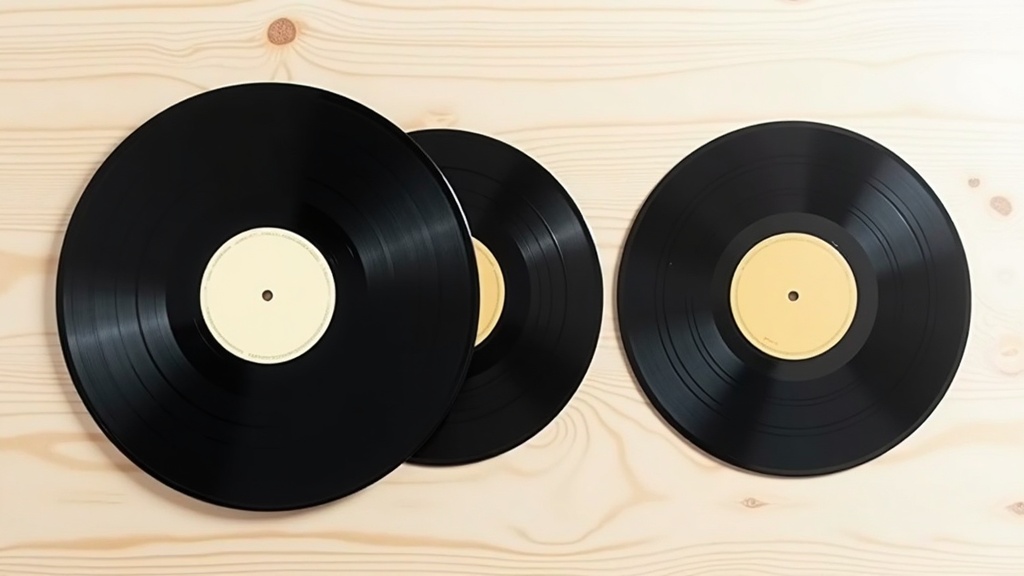
LP, EP, 7-inch, 12-inch, 33 RPM, 45 RPM — standing in front of a wall of records at a shop, it’s easy to feel lost about what to look for. Break it down into three axes — format, size, and speed — and choosing a record becomes a whole lot clearer.
LP, EP, SP — Playing Time and Use Cases by Format
Record formats fall into three main categories based on playing time and purpose.
| Format | Full Name | Approx. Playing Time Per Side | Primary Use |
|---|---|---|---|
| LP | Long Play | ~20–25 minutes | Full albums |
| EP | Extended Play | ~7–10 minutes | Mini releases with 2–4 tracks |
| SP | Standard Play | ~3–4 minutes | Singles from the 78 RPM era |
SP records are essentially nonexistent in today’s new release market. If you’re just getting started, you’ll most likely be dealing with LPs or EPs (7-inch singles).
Size Differences: 7-Inch, 10-Inch, and 12-Inch
Record size refers to the physical diameter of the disc. It’s worth noting that format and size don’t always correspond one-to-one.
- 7-inch (~17 cm): The standard size for singles. At 45 RPM, each side runs about 3–5 minutes. Highly collectible for the sleeve art alone.
- 10-inch (~25 cm): A middle-ground size used for EPs and some limited releases. Relatively uncommon in today’s market.
- 12-inch (~30 cm): The standard for LP albums. In club music, 45 RPM 12-inch maxi singles are also widely available.
Even among 12-inch records, 33⅓ RPM and 45 RPM differ in playing time and sound characteristics. Always check the speed printed on the label before you buy.
33⅓, 45, and 78 RPM — What Changes When the Speed Changes
Speed isn’t just about playback rate — it’s directly tied to groove density and sound quality.
Faster speeds mean wider grooves, which allows more audio information to be encoded. As a result, 45 RPM singles tend to have a wider dynamic range and better low-frequency resolution than 33⅓ RPM LPs. The trade-off, of course, is shorter playing time.
About 78 RPM (SP Records)
These shellac-based discs — made from a resin derived from lac bugs — were the dominant format from the pre-war era through the 1950s, and are made from a completely different material than modern vinyl. Playing them requires a dedicated 78 RPM stylus, which means most modern cartridges simply won’t work.
Colored Vinyl, Picture Discs, and Other Special Pressings
Special pressings are one of the most visible symbols of the vinyl revival, and they’re catnip for collectors.
- Colored vinyl: Records pressed in red, blue, clear, and other colors. Sound quality is generally on par with standard black vinyl, though some say it can be slightly inferior.
- Picture discs: Visually striking collector’s items with artwork printed directly on the disc surface. Because the grooves sit closer to the outer label area, inner-groove distortion is more pronounced — pure sound quality takes a back seat to aesthetics here.
- Splatter / marbled vinyl: Records made by blending multiple colors of vinyl, resulting in a unique pattern on every copy. No two records from the same pressing look exactly alike.
Special pressings have undeniable visual appeal, but if sound quality is your top priority, standard black vinyl is the safer bet. Many listeners keep one copy for display and another for actual listening.
The Sound Characteristics of Analog Records
“Records sound better than CDs” — you’ve heard it before. But surprisingly few people can explain exactly what the difference is and why. Let’s dig into the mechanics and get to the bottom of it.
Analog vs. Digital Waveforms — The “Continuity” of Sound
An analog record captures sound vibrations directly as physical groove shapes — a series of ridges and valleys pressed into the disc. During playback, the stylus traces those grooves and converts the vibrations into an electrical signal. The waveform is completely continuous; there’s no such thing as “sampling” in this process.
Digital audio, by contrast — CDs being the classic example — works by “sampling” the sound wave at regular intervals and converting those snapshots into numbers. CDs sample 44,100 times per second. Any information that falls between samples simply isn’t recorded.
The Core Difference Between Analog and Digital
Analog = sound waveform recorded as a continuous curve
Digital = sound waveform recorded as a series of closely spaced data points
Neither is inherently superior — they are fundamentally different methods of recording.
High-Frequency Content, Dynamic Range, and the Reality of “Warmth”
The “warmth” and “smoothness” often attributed to vinyl are largely the result of harmonic distortion and the subtle micro-variations introduced by the physical playback process. Far from being a flaw, many listeners find these qualities genuinely pleasant.
That said, dynamic range — the gap between the quietest and loudest sounds — is wider in digital audio, and CDs clearly win on noise floor. Analog playback inevitably introduces surface noise and pops, so there’s an inherent trade-off when it comes to reproducing silence.
How Record Condition, Stylus, and Turntable Affect Sound Quality
One of the most fascinating — and demanding — aspects of analog playback is how much the hardware and record condition shape the sound. The same record can sound completely different depending on stylus wear, cartridge type, and turntable motor accuracy.
Where digital offers consistent playback regardless of setup, analog rewards the effort you put in — the more care you take, the better it sounds. Whether you enjoy that hands-on process is ultimately what determines whether analog is right for you.
The Pros and Cons of Analog Records
“The sound is great,” people say — but then you actually get into it and find it’s more work than expected. That’s a common story. Understanding both sides before you buy goes a long way toward avoiding regret.
The Upsides: Sound Quality, Ownership, Artwork, and Investment Value
Key Benefits of Analog Records
- Sound character: As discussed earlier, the continuous waveform produces a listening experience that differs noticeably from digital — particularly in the “airiness” of the highs and the weight of the low end. When a room fills with sound from a good set of speakers, many listeners call it a completely different experience.
- Ownership and ritual: Taking out the record, dropping the needle, flipping to side B — these deliberate actions deepen your engagement with the music and change the way you listen.
- Artwork at full scale: A 12-inch sleeve (~30 cm) carries a level of visual detail and presence that streaming thumbnails simply cannot match.
- Collectible and investment value: Rare pressings and original releases can command serious prices on the market — these are far more than disposable media.
The Downsides: Storage, Handling, Cost, and Convenience
Drawbacks That Are Easy to Overlook
- Storage conditions: Heat, humidity, and direct sunlight can all warp records. Vertical storage and proper climate control are non-negotiable — and take up real space.
- Delicate handling: Fingerprints, dust, and static electricity all lead to sound degradation and skipping. You’ll need cleaning brushes, anti-static fluid, and other maintenance supplies on top of everything else.
- Upfront cost: Enjoying records properly requires at minimum a turntable, phono preamp, amplifier, and speakers. Even an entry-level setup represents a meaningful investment — check current prices at official sites and retailers before budgeting.
- Convenience: You can’t take it outside, and there’s no instant skip. Records suit a “sit down and really listen” approach far better than background listening.
Whether you can embrace the process — and genuinely enjoy it — is the honest deciding factor in whether analog records will be a lasting part of your life.
How to Choose the Right Record for You
The moment you search for a record to buy, you’re hit with terms like “new pressing,” “original pressing,” “reissue,” “domestic,” and “import.” The choice affects both price and sound significantly, so let’s untangle it all here.
New Pressings, Reissues, and Original Pressings — Differences and Price Ranges
Start with the three definitions.
Original Pressing (First Press): Manufactured at the time of an album’s initial release. Highly regarded for sound quality, but rare originals can easily run from hundreds to thousands of dollars.
Reissue: A later repress of an older title. Mastering may be improved over the original — or worse — and quality varies considerably from title to title.
New Pressing: Currently available new product, often on 180g heavyweight vinyl with consistent quality. Prices vary by title and label — check official sites or retailers for current pricing before buying.
If you’re just starting out, a new pressing or reissue in guaranteed condition is the practical choice. Original pressings carry collectible appeal, but you’ll need to accept both condition risk and price risk alongside them.
Domestic vs. Import Pressings — Sound Quality, Liner Notes, and Availability
You may have heard that imports sound better. In reality, the difference varies so much from record to record that no blanket statement holds up.
| Domestic Pressing | Import Pressing | |
|---|---|---|
| Liner Notes | Japanese liner notes included | Generally not included (with some exceptions) |
| Lyrics | Often included | Rarely included |
| Availability | Easy to find at domestic stores and online | Mainly through overseas shipping or import specialists |
| Sound Quality | Depends on the pressing | Depends on the pressing |
If you want to read about the artist’s background, domestic pressings have the edge. If you’re purely in it for the music, either works fine. Comparing multiple pressings of the same title is itself one of the great pleasures of record collecting.
Understanding Used Record Condition Grades (M / EX / VG+)
The first thing to learn when buying used records is the internationally recognized condition grading system.
M (Mint)
Sealed, unplayed, equivalent to new. Essentially never seen in the used market.
EX (Excellent)
Near-mint condition. May have minor sleeve scuffs, but nothing that affects playback. Considered the practical top grade in the used market.
VG+ (Very Good Plus)
Light surface marks present. May produce slight pops during playback, but well within acceptable range for enjoying the music.
VG (Very Good) and Below
Visible scratches or dirt. A record cleaner may help, but assessing condition accurately is difficult for beginners, and buying carries real risk.
In practice, “EX” can mean different things at different shops. When possible, inspect the record in person before buying, or make sure you understand the grading standards of the shop you’re purchasing from.
Sound Quality Checkpoints by Genre
What to look for in a record depends on the music you listen to.
Classical & Jazz: The luster of string instruments and wide dynamic range are everything. Surface noise shows up most in quiet passages, so EX or better is the safe call.
Rock & Pop: Focus on the energy and separation of the band sound. VG+ is often more than enough to capture what the music is about.
Hip-Hop & Electronic: Low-end weight and definition are key. Even reissues on 180g heavyweight vinyl tend to deliver solid, controlled bass.
Vocal-Focused Music: The natural breath and texture of a voice really shines on vinyl. Here, mastering quality matters more than the physical condition of the record.
Balance your genre preferences against your budget, and use that as your guide when picking your first record.
Top 3 Jazz Records to Start Your Vinyl Collection
“I want to get into jazz, but I have no idea where to start” — sound familiar? Jazz has an enormous discography, which makes choosing that first record all the more important. Here we’ve hand-picked three essential albums based on sound quality, performance, and availability — records you’ll keep coming back to for years.
Miles Davis – “Kind of Blue” — The Best-Selling Jazz Album of All Time
Released in 1959 on Columbia Records, this landmark album introduced modal jazz — an improvisational approach built around scales rather than chord changes — to the world. With solos from Miles Davis, John Coltrane, and Cannonball Adderley all on a single record, it’s the perfect introduction to the “vocabulary” of jazz.
Why It Sounds Great on Vinyl
The interplay between the bass line and piano at the opening of “So What” comes through with remarkable low-end definition on analog. The lingering shimmer of the cymbals — often buried in the CD mix — feels like it fills the room when played on vinyl.
- Universally regarded as an essential starting point for beginners and seasoned listeners alike
- Multiple reissues exist, making it relatively easy to find
A word of caution: Original pressings (US Columbia 6-eye) in good condition are rare and expensive. Your best bet is to start with a reissue from Mobile Fidelity (MoFi) or the Sony Legacy series.
Widely regarded as the definitive jazz starter record, this is a must-have if you want to experience the warm, immersive soundstage that only analog can deliver. Check current prices and availability below.
John Coltrane – “A Love Supreme” — The Pinnacle of Spiritual Jazz
Released in 1965 on Impulse! Records, this four-part suite features Coltrane’s unbeatable quartet: McCoy Tyner on piano, Jimmy Garrison on bass, and Elvin Jones on drums. It’s a work Coltrane created as a musical expression of gratitude to God, and the density and intensity of the playing stands among the greatest achievements in jazz history.
- Elvin Jones’s layered, polyrhythmic drumming comes through with stunning three-dimensionality on vinyl
- The bass ostinato in “Acknowledgement” is a genuine benchmark for low-frequency reproduction
Being honest about the downsides: The intensity of this record is not easy listening — it’s not background music. Warm up with “Kind of Blue” first, and you’ll absorb far more of what’s happening here.
Coltrane’s “A Love Supreme” remains one of the most beloved jazz records in the world, and it’s equally celebrated as an analog showcase. Check the latest stock and pricing below.
Bill Evans – “Waltz for Debby” — The Gold Standard for Piano Trio Sound
Recorded live at the Village Vanguard in New York City and released by Riverside Records in 1962, this album features Bill Evans on piano, Scott LaFaro on bass, and Paul Motian on drums. Their performance is still held up as the ideal of interplay — three equal voices in conversation — and continues to set the benchmark decades later.
What Makes the Sound Special
Despite being a live recording, the room’s natural reverb feels organic rather than intrusive, and you can even hear Evans’s key attacks and pedal noise. Play it on vinyl and you’ll feel a genuine sense of physical presence — as if you’re sitting in the room with the band.
- Widely used as a reference recording for evaluating piano timbre and reproduction
- Scott LaFaro passed away just ten days after this session, giving the recording exceptional historical significance
A word of caution: The original Riverside pressing has a complicated history with both mono and stereo versions in circulation. Check the label details before buying, or play it safe with an official Riverside reissue. Verify the specifics on each label’s official website.
Bill Evans’s “Waltz for Debby” is a celebrated entry point into jazz and one of the finest records for savoring the soft, rich overtones of an acoustic piano the way only analog can reproduce them. Check current stock and the best price below.
4 Must-Have Rock & Pop Vinyl Records
If you’ve been listening to classic rock albums on CD and want to experience them on vinyl, you’re not alone. Rock and pop are genres where analog shines — the wide frequency range means guitar harmonics and vocal breath are captured in ways that play directly to vinyl’s strengths. Here are four albums that are especially rewarding to hear on a turntable.
The Beatles – “Abbey Road” — The Pinnacle of Studio Recording
Released in 1969. Recorded at Abbey Road Studios shortly before the band’s breakup, this album represents the ultimate achievement in studio craft. Producer George Martin and engineer Geoff Emerick’s meticulous use of multitrack recording comes alive on vinyl — each instrument is placed in the stereo field with remarkable clarity and precision.
What to listen for on vinyl
- The Side B medley — instruments pan across the left and right channels in a way that creates a genuinely three-dimensional soundstage
- George Harrison’s guitar on “Something” — subtle upper harmonics emerge with more richness than on digital
- The bass on “Come Together” — deep, physical low end that you can feel through your woofers
A note on pressings: The sonic character varies significantly between remaster and original pressings. Check the pressing year before you buy.
“Abbey Road” is the go-to first vinyl purchase for a reason — but prices vary widely depending on the pressing and condition. Check the links below for current listings and pricing.
Pink Floyd – “The Dark Side of the Moon” — The Textbook for Stereo Imaging
Released in 1973. Many audio engineers reach for this record when dialing in speaker placement — it’s long been used as a reference for stereo imaging and soundstage accuracy. From the opening heartbeat to sounds that seem to float beyond the edges of your speakers, this album rewards a well-set-up system like few others.
Worth knowing upfront: The album’s wide soundstage and heavy use of spatial effects can come across as vague or unfocused on budget systems or in small rooms. Ideally, you’ll want enough space between your speakers to let the imaging breathe.
The opening of “Money” — with its 7/4 rhythm and sound effects panning alternately left and right — flows more naturally on vinyl. Because analog reproduces a continuous waveform rather than discrete samples, the transitions feel more seamless than the digital version.
If you want to experience what vinyl does with space and atmosphere, this is the album to start with. Check the link below for current availability and pricing.
Fleetwood Mac – “Rumours” — Where Pop and Vinyl Meet Perfectly
Released in 1977. Recorded amid serious personal turmoil within the band, this album is a masterpiece both musically and sonically. It’s frequently recommended as an entry point into pop-rock on vinyl — the layered vocals and acoustic guitar textures carry a raw, physical presence that digital simply doesn’t replicate.
Why it’s ideal for beginners
- The recording is clean and neutral — it won’t expose flaws in your setup
- The dynamic range is moderate, making it easier for your stylus to track consistently
- Tracks like “Go Your Own Way” and “The Chain” are especially compelling on vinyl
If you’re not sure where to start with vinyl, “Rumours” by Fleetwood Mac is the classic go-to choice. Check the link below for current stock and pricing.
Daft Punk – “Random Access Memories” — Modern Recording Meets Analog Playback
Released in 2013. Despite being an electronic duo, Daft Punk took the unconventional route of assembling live musicians in the studio and combining live performance with tape recording. The album won the Grammy for Album of the Year, and its musical and sonic credentials are beyond question.
Funk tracks like “Get Lucky” and “Lose Yourself to Dance” take on a new dimension on vinyl — the interplay between bass and drums locks into a cohesive low end that feels more groove-driven than the digital version.
A few things to keep in mind: This is a double LP, so each side holds less music — you’ll be flipping records more often. The mix of electronic and acoustic sounds also means the tonal balance can shift noticeably depending on your cartridge. If you have a chance to audition it before buying, take it.
“Random Access Memories” is widely recognized as one of the best modern albums for vinyl listening. Check the link below for current pricing and availability.
Top 3 Japanese & Classical Records Worth Owning on Vinyl
Have you ever felt that Japanese records sound thin compared to Western classics? In reality, the recording era and mastering quality make all the difference — well-mastered Japanese pressings can hold their own on analog just as strongly as any Western release. City pop albums in particular are widely known to sound better on original analog pressings than on digital remasters, with the midrange and high-frequency shimmer coming through far more vividly.
Tatsuro Yamashita – “FOR YOU” — The Pinnacle of Japanese City Pop on Vinyl
Released in 1982, this album is celebrated for its meticulous studio craftsmanship and layered vocal arrangements. On vinyl, the opening percussion hit of “LOVELAND, ISLAND” snaps to life with striking clarity, and the separation between stacked chorus vocals becomes remarkably distinct.
What to listen for: A unique soundstage where extended highs and rich vocals coexist. The reverb tails that feel compressed on CD bloom naturally and spaciously on the analog pressing.
One thing to note: While copies circulate frequently in the used market, condition varies widely from record to record. Always inspect the surface carefully before buying.
The vinyl pressing of Tatsuro Yamashita’s “FOR YOU” is an essential listen for anyone who wants to experience the sonic beauty of Japanese pop in its purest form. Check current availability and pricing before you buy.
Mariya Takeuchi – “VARIETY” — The Defining Album of the City Pop Revival
Released in 1984, this is the album that features “Plastic Love” — and it has been catapulted back into the spotlight by the global city pop boom in recent years. Playing it on vinyl lets you experience the recording style of the era firsthand: synth bass punches through with sharp attack while acoustic guitar tones float in the same sonic space, a blend that feels entirely of its time.
Downside: Demand has driven up prices, and original pressings in good condition are increasingly expensive. Multiple reissues also exist, so it’s worth verifying pressing details before purchasing to make sure you’re getting the version you actually want.
Mariya Takeuchi’s “VARIETY” on vinyl remains one of the most sought-after records in the Japanese city pop catalog, with a loyal following in the used market. Check current prices and availability if you’re interested.
Karajan Conducts Beethoven’s Symphony No. 9 — Recreating the Orchestral Soundstage
The greatest appeal of listening to classical music on vinyl is the sense of “being in the room” with the orchestra. The subtle dynamic swells within the string sections, and the decay of a timpani strike hanging in the air — these are exactly the kinds of details that fall within the wide dynamic range where analog truly excels.
Multiple recordings and pressings of Karajan’s Beethoven 9th exist. The sonic character differs depending on which era’s recording and which label’s pressing you choose, so be sure to check the pressing details at your point of purchase.
Good to know: Classical LPs are cut with wider groove spacing, which reduces low-frequency distortion. This also makes them an excellent entry point for anyone hearing a full orchestra on vinyl for the first time.
Karajan’s Beethoven 9th is as classic a starting point as it gets for anyone new to analog listening. Check current stock and pricing to find the right pressing for you.
Vinyl Record Formats & New vs. Used: Comparison Guide
“What’s the difference between an LP and an EP?” “Should I buy new or used?” — These are the questions every beginner stumbles over at some point. Let’s clear them all up right here.
Format Specs at a Glance (Playing Time, Speed, Size)
Analog records come in three main formats, each with its own speed, size, and playing time. Knowing these basics before you buy will save you from setting your turntable to the wrong speed.
| Format | Size | Speed | Approx. Playing Time (per side) | Primary Use |
|---|---|---|---|---|
| LP (Album) | 12 inch (~30 cm) | 33 1/3 RPM | ~20–25 minutes | Full albums, complete classical works |
| EP (Single) | 7 inch (~17 cm) | 45 RPM | ~7–8 minutes | Singles, B-sides |
| 12-Inch Single | 12 inch | 45 RPM | ~12–15 minutes | Dance music, remixes |
| SP (Shellac/78) | 10–12 inch | 78 RPM | ~3–4 minutes | Pre-1950s classical and jazz |
For beginners, start with a turntable that supports 33 1/3 RPM. The vast majority of LPs sold today run at this speed, making it the most versatile choice regardless of genre. Playing 78 RPM shellacs also requires a dedicated cartridge, so collecting SPs is best left for intermediate and advanced collectors.
New vs. Used, Domestic vs. Import: Quick Comparison
Even for the same title, sound quality, price, and availability can vary significantly depending on whether you’re buying new, used, domestic, or imported. “New is always better” isn’t necessarily true — the condition of the pressing and the mastering source can make a bigger difference than you’d expect.
| Option | Pros | Cons | Best For |
|---|---|---|---|
| New (Domestic) | Guaranteed condition, includes OBI strip and full liner notes | Higher price, out-of-print titles unavailable | Your first record, gifts |
| New (Import) | Access to titles not released domestically, often cheaper | No Japanese liner notes, risk of jacket damage in shipping | Western music fans, budget-conscious buyers |
| Used (Domestic) | Access to out-of-print and original pressings, hidden gems possible | Condition varies, must inspect before buying | Hunting rare titles, vintage sound seekers |
| Used (International) | Chance to find first pressings and original master records | Higher risk of noise, warping, and shipping damage; returns are difficult | Collectors, advanced enthusiasts |
Key things to check when buying used: Visually inspect the playing surface (deep scratches cause skipping), check the jacket for mold smell (it can transfer to the record), and look at the center label condition (it helps determine the pressing era). When buying online, always verify the seller’s grading (EX, VG+, etc.) before purchasing.
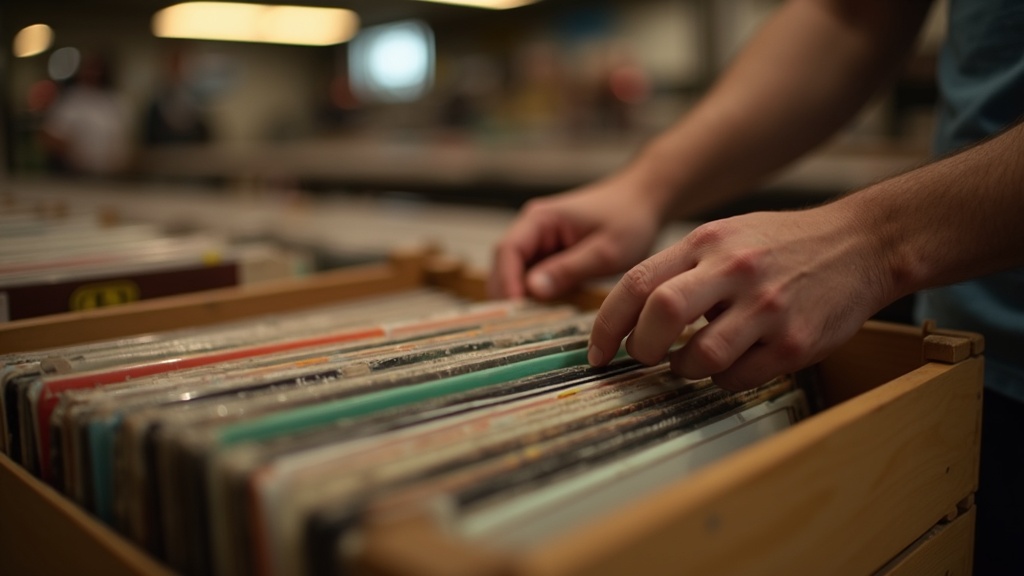
If you want the best of both worlds — analog warmth with modern connectivity — the Audio-Technica AT-LP120XBT-USB is a standout choice. It pairs Bluetooth output for wireless speakers with USB recording capability. Check the latest pricing and full specs at official retailers and major online stores.
For those who want to go deeper into the analog experience, the Pro-Ject Debut Carbon EVO comes equipped with a carbon fiber tonearm and an Ortofon cartridge straight out of the box. Starting in the mid-$400s, it delivers genuine hi-fi sound at a price that makes it hard to overlook for anyone serious about vinyl.
Wrap-Up: How to Choose Your First Record
Formats, new vs. used, domestic vs. import pricing — if you’ve made it this far, you should have a solid framework for choosing records. Let’s close out with a clear, level-by-level, genre-by-genre guide to picking your very first album.
Walking into a record store with “something kind of jazzy” in mind is a recipe for getting lost. Pick an artist name, or at minimum a single genre, before you walk through the door.
Used records always need a condition check. If you’d rather skip the cleaning hassle, starting with a new domestic LP will likely save you money in the long run.
Buying a record you’ve heard many times on streaming or CD lets you compare sound quality accurately with your own ears. Save unfamiliar albums for after you’ve got some experience under your belt.
First Record Picks by Genre
- Jazz & Classical: Used domestic LP (grade EX or better) — ideal for sound-focused beginners
- Rock & Pop: New domestic LP — experience the sonic difference without worrying about record condition
- City Pop & Japanese Classics: New reissue LP — originals often command premium collector prices
- Electronic & Dance: 12-inch single (EP) — the format lets you feel the bass advantage firsthand
Don’t let the search for the perfect record paralyze you. The fastest way to learn is to put something on and drop the needle. Go ahead — just spin one.